

Two batteries, two completely different design philosophies. Tesla built one large appliance that swallows your solar inverter and your storage in a single enclosure. Enphase built a small brick you buy as many of as you need. Picking between them is less about which is better and more about which shape fits the house you actually have. Tesla also sells panels and Solar Roof; what solar company Tesla owns covers that side.
Here is the thing most comparison pages bury: the tax situation changed underneath both of these products at the start of this year, and it changes the math more than any spec on either datasheet.
What Are the Headline Specs?
| Spec | Tesla Powerwall 3 | Enphase IQ Battery 5P |
|---|---|---|
| Usable capacity | 13.5 kWh | 5.0 kWh |
| Continuous power | 11.5 kW | 3.84 kW |
| Peak power | 11.5 kW | 7.68 kW (3 s) / 6.14 kW (10 s) |
| Chemistry | LFP | LFP |
| Inverter | Integrated hybrid (solar + battery) | Six embedded microinverters, AC-coupled |
| Warranty | 10 years, 70% capacity retention | 15 years, up to 6,000 cycles |
| Typical installed cost | $12,000-$16,500 | $8,000-$11,000 per unit |
Both use lithium iron phosphate cells, so the old NMC-versus-LFP safety argument is settled and irrelevant here. The real divergence is architectural, and it shows up in every other decision you make.
Which One Actually Costs Less?
Tesla, and it isn't close on a per-kilowatt-hour basis. EnergySage puts the average installed Powerwall 3 at $13,473, which works out to roughly $998 per kWh of usable capacity. A single IQ Battery 5P at $8,500 installed lands near $1,700 per kWh, because you're paying for six microinverters, an enclosure, and a truck roll to deliver 5 kWh.
Scale it up and the gap widens into real money. Matching the Powerwall 3's capacity takes three IQ Battery 5P units, which is 15 kWh for somewhere between $24,000 and $33,000 installed. That is roughly double.
Matching one Powerwall 3's capacity takes three Enphase IQ Battery 5P units, roughly $24,000 to $33,000 installed against $12,000 to $16,500 for the Tesla, which is about double the cost for a comparable 15 kWh.
So why would anyone choose Enphase? Because capacity parity is the wrong frame for most homes. If you need 5 kWh to cover an evening peak and a few hours of outage cover, buying 13.5 kWh to get there isn't thrifty either. Enphase lets you buy the amount you need. Tesla sells you a fixed block whether it suits your load or not. Our home solar battery sizing guide walks through calculating that number before you shop.
How Did the 2026 Tax Change Affect Both?
Badly, and equally. The Section 25D Residential Clean Energy Credit stopped applying to expenditures made after December 31, 2025, terminated by the One Big Beautiful Bill Act signed on July 4, 2025. If your installation wrapped up in 2026, there's no 30% federal credit waiting for you on either product.
That is not a footnote. On a $13,473 Powerwall 3, the expired credit was worth about $4,042. The same change strips roughly $2,550 off a single IQ Battery 5P at $8,500. Every payback calculation published before 2026 is now wrong by that margin, and plenty of them are still circulating.
One route survives. Batteries installed through a solar lease or a power purchase agreement can still qualify under Section 48E, the commercial investment credit, which remains available for standalone storage through 2032. The credit goes to the system owner rather than to you, so whether any of it reaches your monthly payment depends entirely on how the contract is written. Read that clause before signing. Our 2026 solar tax credit guide covers what remains at the state level.
Which Fits a Retrofit Better?
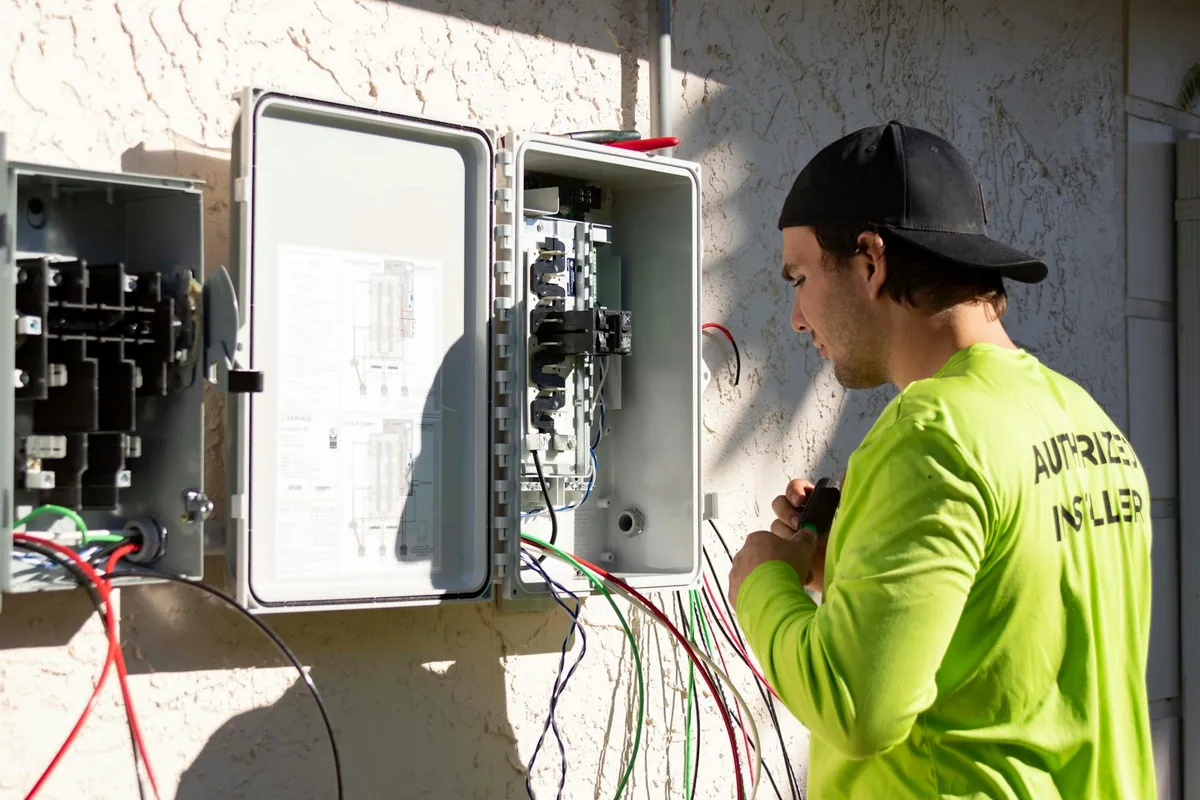
Enphase, decisively, and this is the question that settles it for a lot of existing solar owners. The IQ Battery 5P is AC-coupled with six microinverters inside the box. It attaches to an array that already exists without disturbing whatever inverter is running it, including systems that are not Enphase. You can see the full specification on our Enphase IQ Battery 5P product page.
The Powerwall 3 works the other way. Its hybrid inverter is meant to be your solar inverter, which is elegant on a new installation and awkward on an existing one. Adding it to a working array means either retiring an inverter you already paid for or accepting an AC-coupling workaround that gives up much of the integration advantage you were buying.
New build, no existing hardware, straightforward roof? The Powerwall 3 is the cleaner and cheaper answer. Existing system with years of life left in the inverter? The arithmetic flips.
What About Backup Power and Shading?
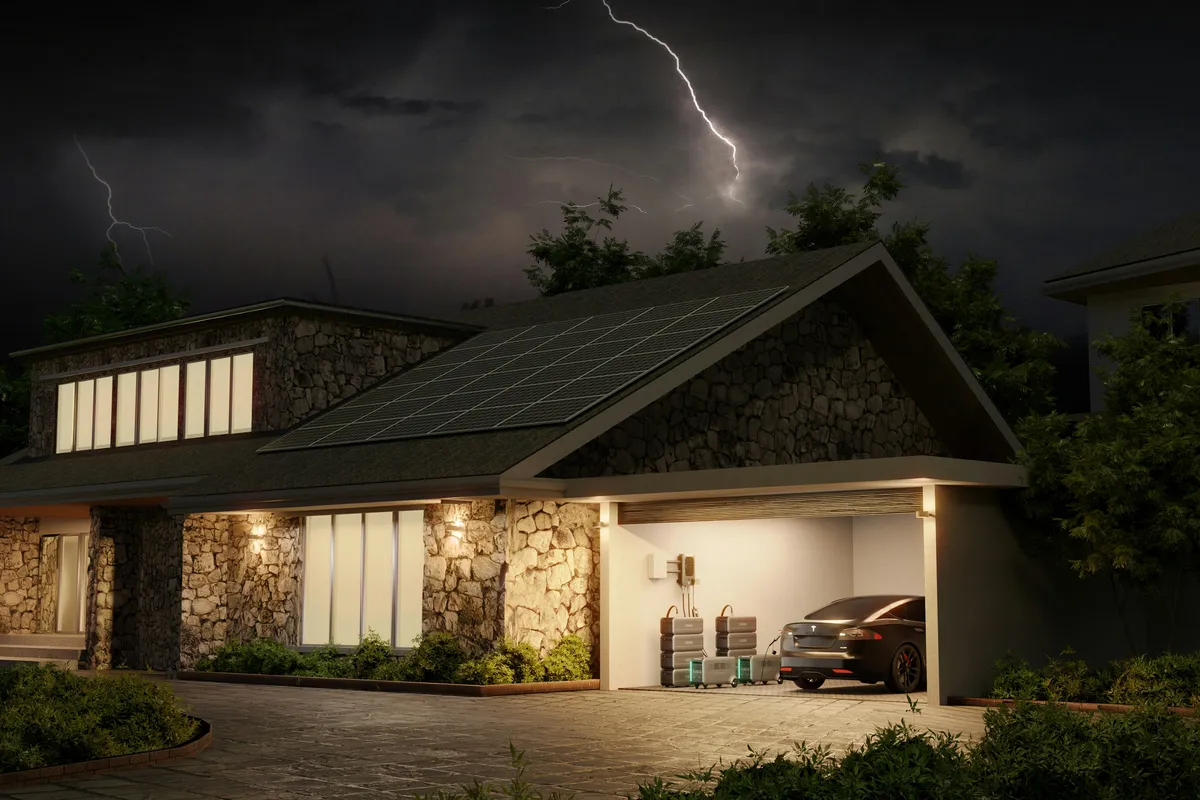
For whole-home backup, 11.5 kW continuous from a single Powerwall 3 is genuinely hard to beat. That runs a well pump, an air conditioner, and a kitchen at the same time. A single IQ Battery 5P delivers 3.84 kW continuous, enough for a fridge, lights, and a few circuits, but not for a hot day with the AC running. You would need three units to reach comparable output, which brings you back to the cost problem.
Shading pushes the other way. The Powerwall 3 manages the array in zones, so a shaded panel affects more of the system than it would under panel-level control. Enphase's per-panel microinverters isolate that loss. If your roof has dormers, chimneys, or a neighbor's oak tree, that difference compounds every afternoon for 25 years. The same architectural trade-off shows up in our SolarEdge vs Enphase comparison.
I'll stake out a position here that some installers will disagree with: for a simple new-build roof, Tesla's cost advantage is large enough that warranty length is the wrong thing to optimize for. Five extra warranty years don't close a $10,000 gap.
What Do the Quotes Leave Out?
The battery is never the whole bill, and both products hide the same category of cost in the same place. Neither one delivers backup on its own. Tesla requires a Backup Switch or Gateway to act as the transfer switch and system controller, and it isn't optional on any Powerwall installation. Enphase requires an IQ System Controller 3 or 3G for the same reason, with the microgrid interconnect device built into it. Quotes that show a battery price with no controller line are incomplete, and the difference between a battery quote and a backup quote is frequently a few thousand dollars.
Ask for the controller as a separate line item on every quote you collect. It is the single most common reason two bids for the same battery arrive thousands apart.
Physical constraints deserve a look too, and they're easy to forget on a spec sheet. An IQ Battery 5P weighs 174 lbs and measures 38.6 by 21.7 by 7.4 inches. That's manageable alone. Three of them side by side need roughly five feet of clear wall, plus the controller, plus code clearances. A garage wall that comfortably fits one Powerwall 3 may not fit the Enphase equivalent, and that's a conversation worth having before the quote rather than on installation day.
Neither is the only shape this can take. Generac's PWRcell stacks capacity in 3 kWh modules rather than fixed units, which changes the sizing conversation before any of the architecture above applies.
One more thing worth knowing about Enphase: installation requires an installer certified through Enphase University, and the batteries move through authorized distributors rather than retail. In markets with few certified installers, that thins your bid pool and quietly removes the competitive pressure that would otherwise pull the price down.
Summary
The Powerwall 3 costs about $998 per kWh installed and delivers 13.5 kWh with 11.5 kW continuous output from one enclosure, which makes it the better value for whole-home backup on a new installation. The Enphase IQ Battery 5P costs closer to $1,700 per kWh but scales in 5 kWh increments, carries a 15-year warranty against Tesla's 10, and retrofits onto an existing array without replacing your inverter. Choose Tesla for new builds, simple roofs, and heavy backup loads. Choose Enphase for retrofits, shaded or complex roofs, and homes that need less than 10 kWh. Both need a separate system controller for backup, so insist on seeing that line item before comparing bids. Neither qualifies for the federal 25D credit in 2026, so budget from the full installed price rather than from any payback figure published before this year.