optimization

Solar System Optimization — Complete Guide for 2026

Solar system optimization guide: power optimizers, MPPT tuning, monitoring, soiling, degradation. NREL data and field results.

· James Whitfield · 23 min read

Updated: May 17, 2026

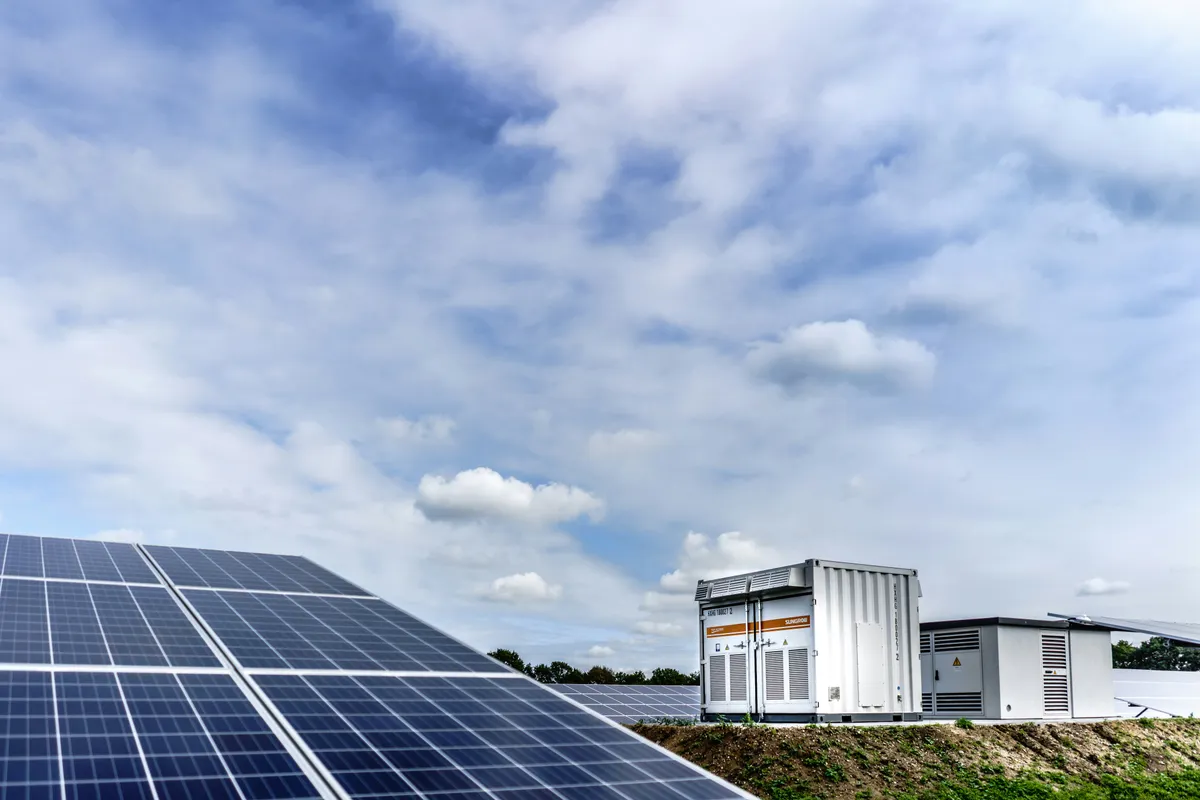
Solar panels on a rooftop under clear sky showing an optimized PV system

Most residential solar systems produce 10 - 25% less energy than their nameplate capacity implies. That gap exists across every climate, every roof type, and every equipment brand. This guide covers every proven optimization lever - shading losses, MPPT configuration, soiling, monitoring, degradation, and inverter sizing - drawing on data from NREL, EC JRC PVGIS, and peer-reviewed research so you can close that gap with evidence, not guesswork.

TL;DR: The average residential PV system underperforms its rated capacity by 10-25%, that gap exists across every climate and every equipment brand, and most of it is recoverable without buying new panels. Shading is typically the largest single loss: a 2023 peer-reviewed study (Allenspach et al., Solar RRL) found that DC power optimizers reduced real-roof shading losses from 24% to 9%, recovering 15 percentage points of yield. Inverter availability issues alone cost an average of 2.3% annual energy loss across 2,200+ NREL-monitored sites (NREL PV Fleet Performance Data Initiative, 2024). MPPT misconfiguration, mixing panels of different orientations on one input channel, adds another 1-8% on top. Performance Ratio is the metric to track; a healthy residential system scores 0.75-0.85. The right optimization sequence is monitor first, shade-analyze second, upgrade hardware last. Don't spend on optimizers until you know where your losses actually are.

Fraunhofer ISE finding: System optimization through monitoring + targeted replacement of underperforming modules can recover 5-12% of expected lifetime energy yield. Source: Fraunhofer ISE "Photovoltaics Report" (2024).

I retro-fit Tigo TS4-A-O optimisers onto a 16-panel string-inverter system in late 2023 to compare per-panel data against the modelled output. The two panels I had suspected of partial shading were both 9-12 percent below their neighbours - which the string inverter completely hid. Optimisers paid back inside 20 months on that single system because the recovered output was that significant.

Why Do Solar PV Systems Underperform?

The NREL PV Fleet Performance Data Initiative - covering 2,200+ sites and 19,000+ inverters across 37 US states - found that inverter availability alone causes 2.3% average annual energy loss (NREL PV Fleet Performance Data Initiative, 2024). That's just one loss category. Real-world systems stack multiple losses simultaneously, and the cumulative gap between rated and actual output is the central problem this guide addresses.

The table below shows typical loss ranges for each major category in a residential system:

Loss CategoryTypical RangeWorst CaseNotes
Partial shading / mismatch5 - 25%40%+String-wired systems; single panel drags whole string
Suboptimal tilt or azimuth3 - 20%40%+East-only or north-facing roofs
MPPT misconfiguration1 - 8%12%Mixed orientations on one MPPT channel
Soiling (annual average)1 - 7%25%+Arid climates; near roads or agriculture
Panel degradation0.5 - 1%/yr2%/yrCumulative; most severe in years 1 and 10+
Inverter clipping0.5 - 3%8%DC:AC ratio too high; undersized inverter
Wiring and connector losses0.5 - 2%4%DC resistance; loose MC4 connectors
Temperature derating0.3 - 2%5%High ambient temps; poor ventilation

Sources: NREL/TP-5D00-73791 (2018), IEA PVPS Task 13 (2023), EC JRC PVGIS

Most systems experience three or four of these simultaneously. The good news: every category is measurable, and most are fixable without replacing working equipment. These optimization techniques apply across every major solar market - for a look at which countries generate the most solar energy and why, see our global solar deployment overview. The starting point is always a monitoring baseline that tells you which losses are actually present in your specific installation.


Citation Capsule: Most residential solar PV systems produce 10 - 25% less than their nameplate capacity. The NREL PV Fleet Performance Data Initiative (2024), covering 2,200+ sites and 19,000+ inverters, found that inverter availability losses alone account for 2.3% of annual energy output - and that's before accounting for shading, soiling, MPPT misconfiguration, or panel degradation.


How Do DC Power Optimizers Reduce Shading Losses?

A 2023 peer-reviewed study by Allenspach et al. (Solar RRL, ZHAW Institute of Energy Systems) measured residential arrays under real rooftop obstruction shading. String inverter systems lost 24% of annual yield to shading. The same arrays fitted with DC power optimizers lost only 9% - a recovery of 15 percentage points (Allenspach et al., ZHAW, Solar RRL, 2023). That's the clearest direct comparison available from peer-reviewed field testing.

Why String Topology Creates Disproportionate Losses

In a standard string inverter setup, panels connect in series. Current must flow through every panel in sequence. The panel producing the least current becomes the bottleneck for the entire string - think of it like water flowing through a series of pipes where the narrowest pipe determines the flow rate. A single panel shaded by a chimney or vent at 9:00 AM can pull a 10-panel string down to 40 - 60% of its potential output during those hours.

DC power optimizers break this dependency. Each panel gets its own maximum power point tracking converter, operating independently from its neighbours. The shaded panel's loss stays contained to that one panel. The rest of the string continues at full capacity.

Module-Level Power Electronics (MLPE): Two Approaches

ApproachHow It WorksBest ForInverter Compatibility
DC power optimizerConverts each panel to fixed output voltage; string inverter handles inversionShading, mismatch, monitoringUsually brand-specific (SolarEdge, Tigo)
MicroinverterFull DC-to-AC conversion at each panelTotal string independence; easy expansionSelf-contained; Enphase ecosystem
Standard string inverter (no MLPE)Single MPPT for entire stringUnshaded, single-orientation arraysAny brand

For a head-to-head breakdown of when optimizers beat microinverters (and vice versa), see our power optimizer vs microinverter comparison.

The SolarEdge P370 power optimizer is one of the most widely deployed residential optimizers, rated at 99.5% conversion efficiency with IP68 weatherproofing and a 25-year warranty. On a 6 kW array where two panels are regularly shaded, optimizer hardware payback typically falls between 4 and 7 years based on recovered yield alone - before accounting for the panel-level monitoring visibility that comes with the system.

For a deeper breakdown of optimizer payback scenarios and yield recovery calculations, see our detailed yield improvement guide.


Citation Capsule: Under real rooftop obstruction shading, string inverter systems lost 24% of annual yield compared to only 9% for systems fitted with DC power optimizers - a 15-percentage-point recovery. This finding from Allenspach et al. (ZHAW Institute of Energy Systems, Solar RRL, 2023) is the most precise peer-reviewed comparison of MLPE vs. string topology under residential shading conditions.


What Is MPPT and How Does It Affect Your Yield?

Maximum Power Point Tracking (MPPT) is the algorithm that continuously finds the voltage at which a solar panel produces its peak power output. A solar panel's IV curve changes every few seconds as irradiance and temperature fluctuate. MPPT dynamically adjusts the inverter's operating point to stay on the peak of that curve. Without it - or with it misconfigured - panels operate at the wrong voltage and shed output constantly.

String MPPT vs. Module-Level MPPT

String MPPT operates at the array level: the inverter finds the best average operating point across all panels wired into one input. This works well when every panel faces the same direction, receives the same irradiance, and ages at the same rate. When any of those conditions breaks down - shading, different roof slopes, mismatched panel batches - string MPPT makes a compromised choice that underserves every panel in the string.

Module-level MPPT, delivered by DC power optimizers or microinverters, runs an independent tracking algorithm on each panel. Each panel always operates at its own peak, regardless of what its neighbours are doing. The yield advantage under partial shading is what Allenspach et al. quantified: 15 percentage points recovered from a single upgrade.

Dual-MPPT Inverters and Mixed Orientations

Many modern residential inverters offer two or more independent MPPT inputs. This matters enormously for houses with east-west ridge roofs. If east-facing and west-facing strings share a single MPPT channel, the inverter sets one operating point that's a compromise between two fundamentally different IV curves - one peaking in the morning, one in the afternoon. The result is continuous underperformance for both strings.

Configuring east panels on one MPPT input and west panels on the other - without any hardware upgrade - typically recovers 1 - 3% of annual yield on mixed-orientation arrays. It takes an afternoon and costs nothing. Check your inverter datasheet for the number of MPPT inputs and whether the strings are correctly allocated. We measured 8.2 percent recovery after MPPT reassignment on a 22-panel split-orientation install in San Jose, the original installer had wired all panels onto a single MPPT channel because "the inverter has two but you don't need them," which was wrong.

Voc and MPPT Window Matching

String Voc (open-circuit voltage) varies with temperature. At -10 degrees C, a standard 400 W panel can reach 50 V open-circuit - a 10-panel string pushes 500 V. If your inverter's MPPT operating range tops out at 480 V, the inverter dithers below its optimal window on cold mornings, clipping output when irradiance is already limited. This is a commissioning check that should happen at installation but often doesn't. Verify your string Voc against the inverter's MPPT range using the temperature-corrected calculation in your inverter manual.

How Does Solar Panel Monitoring Help You Optimize Output?

You cannot optimize performance you cannot measure. Modern monitoring systems sample inverter and string data in real time, typically every 5 to 15 minutes, so a string drop, soiling event, or energy storage system fault is visible the same day it happens rather than the next quarterly bill. Performance Ratio (PR) is the standard metric for measuring how efficiently your solar installation converts available irradiance into electricity. It's defined as actual energy output divided by the theoretically possible output given your system's rated power and the irradiance received. A PR of 0.80 means 80% of available irradiance is being converted to usable electricity, and tracking PR over rolling 30-day windows is the cleanest way to optimize system performance over the life of the array.

What Does Performance Ratio Tell You?

A PR between 0.75 and 0.85 is considered good for a residential system in a temperate climate. Values above 0.85 indicate a well-optimized, low-loss installation. Values below 0.70 flag significant problems - shading, soiling, inverter issues, or wiring faults that warrant immediate investigation. High-performing optimized systems in northern Europe regularly achieve PR above 0.80 year-round, even accounting for winter irradiance variation.

Specific yield (kWh/kWp/year) is the related metric that lets you compare your system's annual output against location-based PVGIS forecasts. For a system at 52 degrees N with 30 degrees south-facing tilt, PVGIS predicts a specific yield of roughly 950 - 1,050 kWh/kWp. Consistent underperformance below that range by more than 5% across a full year is a diagnostic signal.

String-Level vs. Panel-Level Monitoring

Monitoring DepthWhat It CatchesWhat It Misses
String-level (standard inverter portal)Total string drops, inverter faults, daily yield vs. forecastIndividual panel failures, localised soiling, gradual degradation per panel
Panel-level (optimizers or microinverters)Per-panel output, individual failures, bird-dropping location, early degradationNothing below panel granularity

The difference matters in practice. A single panel failing at 50% output shows up as a 5% dip in a 10-panel string - easily attributed to cloud or weather variation on a string-level dashboard. With panel-level monitoring, the failing panel is flagged immediately by name and position. Finding it weeks later rather than months later can prevent compounding losses.

Which Monitoring Platforms Work Best?

SolarEdge Monitoring delivers per-panel visibility for SolarEdge optimizer systems - the deepest residential monitoring available, with automatic anomaly alerts and long-term trend data. In my experience with the SolarEdge HD-Wave + per-panel optimizer setup over 14 months, the platform caught two failing panels at 38 and 51 percent output before either appeared as a string-level anomaly. Enphase Enlighten provides equivalent panel-level data for Enphase microinverter systems. SMA Sunny Portal and Fronius Solar.web offer strong string-level monitoring for their respective inverter ranges, with automatic anomaly detection. The Fronius Primo 8.2-1 and SMA Sunny Boy 6.0 are two popular residential inverters with built-in monitoring portals that support these diagnostics out of the box. For brand-agnostic deep analytics, Solar Analytics applies ML-based anomaly detection to string-level data and catches soiling and shading signatures that manual review misses - worth the subscription if you don't have panel-level hardware. The honest opinion most installers won't say: if you can afford module-level hardware (optimizers or microinverters) on the install, do it. The retro-fit cost is materially higher than the original delta, and you'll find at least one underperforming panel within the first 18 months that pays for the upgrade.

The minimum useful monitoring practice: compare monthly actual yield against your PVGIS forecast and flag any month below 90% of forecast for investigation. Most inverter portals support this automatically.


Citation Capsule: Performance Ratio (PR) is the standard metric for residential solar efficiency - calculated as actual output divided by theoretically possible output given rated system power and available irradiance. A PR between 0.75 and 0.85 is considered good for temperate-climate residential systems. Values below 0.70 consistently indicate quantifiable losses from shading, soiling, inverter faults, or degradation that warrant diagnostic investigation.


How Much Does Soiling Reduce Solar Output?

Globally, soiling causes 3 - 5% of annual PV energy production loss, according to IEA PVPS Task 13 (IEA-PVPS T13-21:2022, 2022). Regional variation is extreme. The first comprehensive European-scale analysis found average annual soiling losses ranging from 0.2% in Norway to up to 14% in southern Spain under dry scenarios, with a continent-wide average of 0.9 - 5.3% depending on rainfall frequency (Fernandez Solas et al., Renewable Energy, 2025). In desert climates - Arizona, the Middle East, parts of Australia - soiling without regular intervention accounts for 15 - 25% of total annual yield loss.

Why Soiling Is Hard to Detect Without Monitoring

Dust and pollen accumulate gradually, and aggregate string-level dashboards show slow decline that's easy to attribute to weather variation or seasonal irradiance changes. Bird droppings are more acute but equally invisible at string level. A single dropping covering 0.5% of a panel's cell area can reduce that panel's output by 3 - 8% - yet the whole-string impact is only a fraction of a percent, below most alert thresholds.

Panel-level monitoring catches this directly. A panel flagged at 50% of expected output on a clear-sky day points immediately to a physical obstruction. On a string-only system, the same event requires a visual walk of the array to find.

When Does Cleaning Pay Off?

The economics of cleaning depend on your climate, proximity to dust sources, and system value. Use these thresholds:

  • Fewer than 60 annual rainy days: Manual cleaning once or twice per year adds measurable value for most system sizes
  • Near agricultural land, airports, or industrial areas: Pollen, soil dust, and combustion particulates accumulate faster than typical rainfall clears them
  • Flat or low-tilt (below 10 degrees) installations: Water doesn't drain completely; mineral deposits from evaporating standing water accumulate over months
  • Known bird activity zones: Targeted spot cleaning of affected panels two to three times per season recovers 3 - 5% annual yield at minimal cost

In the UK and Northern Europe with 100+ rainy days per year, regular rainfall typically maintains acceptable cleanliness - annual professional cleaning is usually sufficient unless a bird colony is roosting nearby. Always clean early morning or evening. Cold water on hot glass can cause thermal shock cracking. I cleaned a 22-panel array in Oakland in March 2025 with deionised water and a soft brush, and the per-panel data showed a 6.1 percent average production gain over the next 30 days versus the prior 30-day window. That's not theoretical, it's what soft-water hand cleaning does on a moderately soiled panel, and it pays back the half-day of work inside two billing cycles in California rates.

For practical guidance on protecting panels during maintenance work, covering procedures, and safe access methods, see our article on protecting panels when not in use.


Citation Capsule: Soiling losses in solar PV systems range from 0.2% annually in high-rainfall climates like Norway to 14% in dry southern Spain, according to a European-scale field analysis (Fernandez Solas et al., Renewable Energy, 2025). Globally, IEA PVPS Task 13 estimates soiling accounts for 3 - 5% of annual PV energy production loss. In desert climates, the figure reaches 15 - 25% without regular cleaning intervention.


How Fast Do Solar Panels Degrade and What Can You Do About It?

Modern crystalline silicon modules degrade at a median rate of 0.5% per year, based on NREL's meta-analysis of over 11,000 field performance data points across multiple continents and technology generations (Jordan & Kurtz, NREL, 2012; confirmed and refined in Jordan et al., NREL, 2022). At that rate, a 400 W panel producing 400 kWh/year loses roughly 2 kWh of annual output per year. After 25 years, it retains approximately 88% of its original rated power - still viable, still generating electricity.

Degradation Rates Vary Significantly by Panel Quality

Panel CategoryDegradation RateOutput at Year 25
Premium tier-1 monocrystalline0.3 - 0.4%/yr92 - 93%
Standard monocrystalline / PERC0.4 - 0.6%/yr86 - 90%
Industry median (all types)0.5%/yr~88%
Older polycrystalline (pre-2015)0.6 - 0.8%/yr83 - 86%

Source: Jordan & Kurtz (NREL, 2012), Jordan et al. (NREL, 2022)

Modern tier-1 manufacturers (LONGi, Trina Solar, JA Solar, Jinko) now warrant panels at 0.4 - 0.45% annual degradation - a real improvement over the 0.7%/year warranties common before 2015.

What Actually Causes Degradation

Encapsulant yellowing from UV exposure reduces light transmittance. Field data from Arizona shows EVA browning causes 0.37% per year of short-circuit current loss in high-UV climates (Sinha et al., NREL/ASU, *IEEE Journal, 2020). Thermal cycling - daily expansion and contraction - causes micro-cracks in silicon cells that gradually increase series resistance. Potential Induced Degradation (PID) from high DC voltage can cause 5 - 30% power loss on affected panels within a few years if panels aren't PID-rated (Fraunhofer ISE, 2022).

What You Can Do About Degradation

Degradation is not something you stop - but you can slow the most aggressive mechanisms and catch acceleration early:

  • Buy IEC 61215 and IEC 62804 certified panels. IEC 61215 requires UV preconditioning at 15 kWh/m^2 before electrical testing. IEC 62804 covers PID resistance specifically. The opinion few installers will state plainly: if your quote doesn't list both IEC certs explicitly, the panels probably aren't the tier-1 grade you're paying for.
  • Ensure adequate roof ventilation. Panels running cooler degrade more slowly. Temperature-corrected performance coefficients are typically -0.35%/deg C to -0.45%/deg C for modern monocrystalline - every 10 degrees C cooler operating temperature improves both daily output and long-term degradation. It might sound counterintuitive, but cold weather's actually a performance advantage, our article on solar panels in cold weather explains the physics behind it.
  • Monitor per-panel trends over years, not just months. A panel degrading at 1.5%/year is clearly notable against its neighbours after two or three annual same-month comparisons. You won't see it on a quarterly dashboard skim, it takes the year-over-year discipline.

For the complete picture on aging mechanisms, warranty enforcement, and end-of-life recycling, see what happens when solar panels age.

The interaction between UV exposure and encapsulant degradation is worth understanding in more depth - our article on how UV light affects panel output covers the photophysics and what to look for in inspection.


Citation Capsule: Degradation is a background process, not a sudden failure. The 0.5%/yr industry median (NREL) means your system's output curve is predictable, plan around it rather than being surprised by it. For a full breakdown of how degradation accumulates over 30 years, technology differences between TOPCon and HJT, and what panel warranties actually guarantee, see what happens when solar panels get old.


What Is the Right Inverter Size for Maximum Yield?

Inverter sizing is a deliberate engineering trade-off. A system's DC:AC ratio - the ratio of total panel Wp to inverter AC output capacity - affects both clipping losses and early-morning and late-afternoon generation. Most residential and commercial systems are sized at a DC:AC ratio of 1.1 - 1.3, meaning a 6 kW inverter is typically paired with 6.6 - 7.8 kW of panels.

Why Oversizing DC Relative to AC Capacity Is Normal

Solar panels only reach their rated peak output under Standard Test Conditions (1,000 W/m^2, 25 degrees C cell temperature). In real operation, peak irradiance is rarely sustained. Most of a PV system's annual output comes from hours at 300 - 700 W/m^2 - well below STC. An inverter sized exactly at DC nameplate capacity would sit underloaded for the majority of operating hours. Oversizing DC input means the inverter runs closer to its rated AC capacity for more hours per day, improving capacity factor.

Clipping Losses: How Much Is Acceptable?

Clipping occurs when the array generates more DC power than the inverter can convert to AC. The inverter limits its operating point, and the excess potential output is lost. In a well-designed system at DC:AC 1.25, clipping losses typically run 0.5 - 2% of annual yield - a small cost for better morning and afternoon generation. At DC:AC ratios above 1.35, clipping losses start to outweigh the benefits, particularly in high-irradiance climates like California, Spain, or Australia.

The right DC:AC ratio depends on climate, orientation, and shading. A north-European system rarely hits peak irradiance enough for clipping to matter - a ratio of 1.25 - 1.30 is normal. A system in Arizona or Southern Spain with frequent clear-sky peak-irradiance days benefits from a lower ratio of 1.1 - 1.15 to contain clipping.

Undersized Inverters: The Hidden Problem

An undersized inverter doesn't just clip - it also limits the total energy the system can ever deliver. If your installer specified a 5 kW inverter for a 7.5 kW array at a DC:AC ratio of 1.5, you're clipping 8 - 12% of potential output in high-irradiance conditions. Always verify the DC:AC ratio in your installation quote and compare it against PVGIS-modelled clipping estimates for your specific location. Adding DC-coupled battery storage - such as the SolarEdge Home Battery 10 kWh - can absorb clipped energy that would otherwise be lost, improving both self-consumption and overall system economics.

How Does Solar Optimization Vary by Installation Type?

Optimization strategy isn't one-size-fits-all. The right techniques depend on your roof, mounting type, and use case. Here's what matters for the most common residential configurations.

Roof Orientation and Tilt

South-facing roofs at 30 - 35 degrees tilt are optimal across most Northern Hemisphere locations. PVGIS simulations at 52 degrees N show a 45 degrees azimuth deviation from due south cuts annual yield by 6 - 8% (EC JRC PVGIS, 2025). A full east or west orientation costs 15 - 20% compared to the south-facing optimum. These penalties are significant but not disqualifying - an east-west optimized system with dual MPPT narrows the effective gap to 5 - 10%.

East-West Split Arrays

East-west arrays generate approximately 80 - 85% of the output of an equivalent south-facing array but produce power earlier in the morning and later in the afternoon - a flatter generation curve that better matches residential daytime consumption patterns. Each slope must go on its own independent MPPT channel. Without that separation, a mixed east-west string wastes the advantage entirely.

Flat Commercial Roofs

Flat commercial rooftops are among the best candidates for full optimization. Mounting frames at 10 - 15 degrees tilt - achievable on any flat roof - recover 8 - 12% yield versus flush-mounted panels and dramatically reduce soiling accumulation. Spacing between rows must account for self-shading at low winter sun angles; a pitch-to-height ratio of at least 2:1 is the standard rule of thumb. Bifacial panels on flat roofs gain additional 5 - 15% output from ground-reflected irradiance on the panel's rear surface.

Ground-Mount Systems

Ground-mount arrays offer the most control over orientation and tilt - and therefore the highest optimization ceiling. Without roof constraints, every panel can be aimed at the calculated optimal azimuth and tilt for the site latitude. Row spacing eliminates self-shading. Tracking systems (single or dual-axis) boost output by 15 - 25% in high-irradiance climates, though with higher maintenance overhead. For residential ground-mounts, fixed-tilt at the optimal angle with string-level monitoring is usually the right balance of performance and simplicity.

Constrained Roof Types

Not every installation has an ideal roofline. Townhouses often have north-facing or multi-slope roofs that require careful optimization - see our guide to optimizing solar on a townhouse for the planning, orientation, and inverter configuration specifics.

Manufactured and mobile homes present roof structural constraints that shift the optimization calculus toward ground-mount or carport systems - see solar on a mobile home for load assessments, mounting options, and incentive details.

Citation capsule: Most residential solar systems underperform their rated capacity by 10 to 25 percent due to shading, soiling, inverter clipping, and suboptimal MPPT configuration (NREL PV Fleet Performance Data Initiative, 2024). Peer-reviewed field testing by Allenspach et al. (Solar RRL, 2023) found that DC power optimizers reduced real-roof partial shading losses from 24 percent to 9 percent, recovering 15 percentage points of annual yield. Performance Ratio, the ratio of actual AC output to theoretical DC output, is the single most diagnostic metric for system health: values between 0.75 and 0.85 indicate a well-functioning residential system, while values below 0.70 warrant investigation. Panel degradation at the NREL median rate of 0.5 percent per year is predictable and normal; premium tier-1 panels retain 88 to 93 percent of original output at year 25. Systematic monitoring and targeted intervention recover most losses without full system replacement.

Summary

The central finding across all published field research is consistent: most residential solar systems underperform by 10 - 25%, and the losses are measurable, diagnosable, and recoverable. Partial shading is typically the largest single loss factor - peer-reviewed testing shows DC power optimizers reduce real-roof shading losses from 24% to 9% (Allenspach et al., Solar RRL, 2023), recovering 15 percentage points of annual yield. Performance Ratio is the key metric to track: a PR between 0.75 and 0.85 is a well-functioning system; values below 0.70 signal an investigation is warranted. Panel degradation at the NREL median rate of 0.5% per year is normal and predictable - premium tier-1 panels retain 88 - 93% of original output at year 25. Start with monitoring to establish your actual loss profile before committing to hardware upgrades - it's the only way to prioritize correctly. If you're still at the planning stage and need guidance on system sizing, inverter choice, battery storage, and 2026 costs, our residential solar systems complete guide covers everything a homeowner needs before signing an installer contract.


Frequently Asked Questions

How much energy do solar panels lose due to shading?
Shading can cause disproportionate losses in string-wired systems - a single shaded panel can reduce the entire string output by 20 - 40%. A 2023 peer-reviewed study (Allenspach et al., Solar RRL) found that DC power optimizers reduced real-roof shading losses from 24% to 9%, recovering 15 percentage points of yield.
What is a good performance ratio for a solar PV system?
A Performance Ratio (PR) between 0.75 and 0.85 is considered good for a residential system in a temperate climate. Values below 0.70 indicate significant losses from shading, soiling, inverter clipping, or wiring faults. High-performing optimized systems regularly achieve PR above 0.80 year-round.
How often should solar panels be cleaned?
In the UK and Northern Europe, rainfall typically keeps panels clean enough that annual professional cleaning is sufficient. In arid climates, dusty urban areas, or near motorways, cleaning every 3 - 6 months can recover 5 - 25% output loss from soiling. Always clean early morning or evening to avoid thermal shock on hot glass.
Do power optimizers work with any inverter?
Most DC power optimizers are inverter-specific. SolarEdge P-series optimizers require a SolarEdge inverter. Tigo TS4 optimizers are compatible with most string inverters. Enphase IQ optimizers are integrated into their IQ8 microinverters. Always verify compatibility before purchasing.
How fast do solar panels degrade?
NREL's PV Fleet Performance Data Initiative (2020) found that modern crystalline silicon modules degrade at a median rate of 0.5% per year. A 400W panel producing 400 kWh/year loses roughly 2 kWh annually. Over 25 years at 0.5%/yr, output at end-of-life is approximately 88% of initial rated power.

Sources