

Both power optimizers and microinverters are module-level power electronics (MLPE), hardware that solves the same core problem: partial shading that drags a whole string's output down to the weakest panel. They differ sharply in architecture, system cost, and how failure hits the array. This guide compares them on six measurable criteria.

How Do Power Optimizers and Microinverters Actually Work?
Both add a device to each panel but do different jobs. A power optimizer is a DC-to-DC converter that finds each panel's maximum power point, then passes optimized DC to a conventional string inverter. A microinverter skips the string inverter, converting DC to AC right at the panel. The practical difference is where DC-to-AC conversion happens: on the roof with microinverters, or in a wall box with optimizers.
| Feature | Power Optimizer | Microinverter |
|---|---|---|
| DC/AC conversion | Central string inverter | At each panel |
| MLPE monitoring | Yes | Yes |
| Main brands | SolarEdge, Tigo | Enphase |
| SafeDC / arc risk | SafeDC (SolarEdge) reduces rooftop DC to ~1 V when de-energized | No high-voltage DC on roof |
| Battery coupling | DC-coupled preferred | AC-coupled |
| Warranty | 25 years on optimizers (SolarEdge, Tigo); 12 years on the SolarEdge inverter | 25 years (Enphase IQ8) |
The architecture difference has real consequences. High-voltage DC runs the full length of the roof in an optimizer system, with the string inverter the single point where DC becomes grid-ready AC. In a microinverter system, each panel's output is already AC at the roof cable, and it works without any central inverter. On safety, SolarEdge's SafeDC drops module voltage to roughly 1 V the moment AC disconnects, an advantage for first responders on a powered roof; microinverters reach the same outcome structurally, with no high-voltage DC on the roof at all.
Which Technology Delivers Better Yield Under Shading?
Shading is where both are supposed to earn their premium over string inverters, and the best independent measurement makes that premium look thin. Allenspach et al. (ZHAW, Solar RRL 7(8), 2200596, 2023) combined indoor power-conditioner measurements with annual shading simulations. Under a chimney shadow they class as light to medium, a string inverter returned about 90.7% of unshaded reference energy; optimizers on the affected modules returned about 92.1%, and optimizers on every module about 91.6%. Call it one to one and a half points a year. The same work found commercial DC/DC optimizers running about 2 percentage points below their published efficiency curves, a loss that applies in full sun as well as shade. Enphase's IQ8 documentation reports 8-10% shading loss in equivalent scenarios, but that's a vendor figure and not measured on the same bench, so don't stack the two.
So the honest ranking under light shading is uncomfortable for both products: the study's authors note that a conventional string inverter typically performs equally well or better. The yield gap between optimizers and microinverters, meanwhile, is under 1% - too small to decide anything. What actually decides it is severity. Heavy or all-day obstruction, three roof orientations, or panels that no longer match each other is where module-level electronics stop being a monitoring upgrade and start returning energy.

String Inverter vs Microinverter: What Do You Actually Trade?
Most quotes frame this as optimizers against microinverters, but the real decision has three options, and the cheapest one is a plain string inverter with nothing on the panels. What does each one give up?
| Plain string inverter | String inverter + optimizers | Microinverters | |
|---|---|---|---|
| Where DC becomes AC | One wall box | One wall box | Behind every panel |
| Shading tolerance | Weakest panel drags its string | Per-panel MPPT | Per-panel MPPT |
| Panel-level monitoring | No | Yes | Yes |
| Rooftop rapid shutdown (NEC 2017+) | Needs add-on module devices | Built in | Built in |
| Single point of failure | Inverter | Inverter | None |
| Typical warranty on the converter | 10-12 years | 12 years inverter, 25 years optimizers | 25 years |
| Parts on the roof | Fewest | One per panel | One per panel |
The row that surprises people is rapid shutdown. Since January 1, 2019, the 2017 National Electrical Code (690.12) has required conductors inside a rooftop array's one-foot boundary to drop to 80 V or less within 30 seconds of shutdown, where that code edition or a later one is adopted. A bare string can't do that alone, so a "plain" string system on a US roof usually still carries a small module-level shutdown device, such as a Tigo TS4 rapid-shutdown unit, on every panel. That's a big part of why Lawrence Berkeley National Laboratory (LBNL) found module-level power electronics on 87% of US residential systems installed in 2024: the cheap option isn't quite as bare as it looks.
Inside that 87%, microinverters have been winning. LBNL's October 2025 data update shows their share of residential systems rising from 33% in 2019 to 56% in 2024, displacing optimizers rather than string-only systems. One caveat from the same report: LBNL can only identify optimizers on systems with SolarEdge inverters, so the optimizer share is probably understated.
Here's the opinionated version. On a single south-facing roof with no shade, paying per panel for either kind of MLPE buys monitoring and code compliance, not energy, and a string inverter with the cheapest compliant shutdown device is the honest baseline every other quote should be measured against.
How Do the Costs Compare in 2026?
What Are the Initial Hardware Costs?
For a standard 10-panel, 4 kW system in 2026, a Tigo TS4-A-O optimizer costs about $38 per panel and a SolarEdge P370 about $45; add a SolarEdge SE6000H string inverter at roughly $950 and hardware runs $1,330-1,400. An Enphase IQ8A microinverter at about $195 per panel covers all 10 for ~$1,950 with no central inverter. On that hardware arithmetic, microinverter systems land roughly 10-20% higher on total installed cost. The gap narrows on larger installs, because a big string inverter scales more slowly than Enphase's flat per-panel price.
For a national anchor, NREL's January 2025 cost history puts a modeled residential system at $3.25/Wdc in 2024. Read that number carefully: from 2022 onward NREL's residential benchmark assumes microinverters only, so it's a microinverter price, not an average of all three architectures, and it can't settle the optimizer-versus-micro question on its own.
What Are Lifetime Costs Including Inverter Replacement?
Microinverters avoid one cost entirely: central inverter replacement. String inverters last 10-15 years and may need one mid-life swap over a 25-year lifetime at $800-1,200 installed. Factoring that in, the lifetime gap shrinks to roughly 5-12%. On a small array the arithmetic can flip outright: the 10-panel example above has a hardware premium of about $550-620 for microinverters, and a single $800-1,200 inverter swap in year 12 or 15 erases it. Note some hybrid batteries like the Tesla Powerwall 3 include their own inverter, shifting the math for both architectures.
What Does Panel-Level Monitoring Look Like in Practice?
Both deliver genuine panel-level fault detection but differ in polling. SolarEdge's mySolarEdge updates at 15-minute intervals, hosted on the inverter and synced to the cloud, so local data survives an internet outage. Enphase Enlighten updates at 5-minute intervals and is cloud-native, more granular but network-dependent. Enphase's tighter resolution catches faults faster (a bird dropping shows up within one cycle), while SolarEdge keeps logging when your router is offline. Neither charges for the core panel-level view; both free tiers cover a homeowner's monthly spot-checks. For interpreting that data, see our solar optimization guide.
Which Is More Reliable Over 25 Years?
The panel-level devices on both sides carry 25-year warranties, but the failure modes differ. A single microinverter failure affects only its panel, a ~200-250 W loss on a 4,000-6,000 W system. A failed SolarEdge central inverter takes the entire optimizer array offline until replaced. Enphase's distributed design means a "full system inverter failure" essentially can't happen.
The warranty paper tells the same story as the architecture:
| Component | Standard warranty (US) | Extendable to |
|---|---|---|
| Enphase IQ8 microinverters | 25 years | - |
| SolarEdge power optimizers | 25 years | - |
| SolarEdge string inverters | 12 years | 20 or 25 years, bought within 24 months of shipment |
| Fronius string inverters | 10 years | 20 years |
| SMA Sunny Boy string inverters | 10 years | 15, 20 or 25 years |
What does the field data say? The best long-run residential sample is a Bern University of Applied Sciences survey reported by pv magazine in February 2023: 1,195 Swiss systems with 2,121 inverters and 8,542 optimizers. Roughly 34.3% of inverters had their first yield-relevant fault by year 15, so about two in three ran fifteen years clean. The same researchers noted that inverters paired with optimizers tended to fault earlier than those without, and that designs with fewer power-electronic parts held up better. Commercial fleets echo the startup pattern: NREL's 2024 PV Fleet report, covering 1,128 systems, found inverter availability lowest in the first six months, then a median system availability of 0.99 once that settled, with the worst tenth at 0.95 or below.
Two practical readings follow. Budget one string-inverter replacement over a 25-year life, or buy the extended warranty if the price is under the $800-1,200 a swap costs installed. And watch the first six months closely, since that's where the fleet data puts the most downtime, and it's also the window when the installer's workmanship warranty is freshest.
When Should You Choose Power Optimizers Instead of Microinverters?
Power optimizers are the better call in four scenarios. First, if your installer already specifies a SolarEdge inverter (for the monitoring ecosystem or SafeDC), adding P-series optimizers is the natural pairing. Second, for DC-coupled battery storage: batteries like the SolarEdge Home Battery, connected before the inverter, avoid AC-coupling conversion losses. Third, on commercial installs above 20 kW, where per-panel microinverter pricing accumulates and one high-capacity string inverter is cheaper per kW. Fourth, when budget drives the decision, since optimizer systems run 10-20% cheaper.
The SolarEdge P370 optimizer pairs with any SE-series inverter, adds 99.5%-efficient per-panel MPPT and IP68 weatherproofing, and carries a 25-year warranty. Tigo TS4 optimizers suit one specific case: mixed-brand installs, since the TS4-A-O works with Fronius, SMA, ABB, and Huawei inverters when the homeowner wants optimizer monitoring without replacing an existing inverter.
There is a third option worth pricing before you commit to either: no module-level electronics at all. On an unshaded, single-orientation roof a plain string design is cheaper and has fewer things to fail, and the only real constraint is how many panels fit one string once temperature is accounted for. Our string configurator works out that limit for a given panel and inverter, so you can see whether a straight string covers your roof before paying per panel for MLPE.
When Should You Choose Microinverters Instead of Power Optimizers?
The clearest case for microinverters is a complex roof with three or more orientations. Because each panel is a standalone AC generator, an east dormer, south main roof, and west lean-to all work together without string-voltage compromises. AC coupling is also simpler: the Enphase IQ Battery 5P connects directly to the AC bus. Grid-outage resilience is another edge: Enphase's Sunlight Backup powers a limited AC load directly from solar with no battery, which optimizer and string systems can't match without extra hardware. And microinverters eliminate high-voltage rooftop DC by design.
Installer certification matters too: an Enphase-certified installer will commission a microinverter system more confidently than an unfamiliar SolarEdge one. For matching panels to inverters, see best solar panels for 2026; for 3-phase wiring, see how solar works with 3-phase power. Down to the flagships? Our SolarEdge vs Enphase comparison weighs cost, battery options, and warranty.
Yield performance alone isn't a meaningful differentiator in 2026, so choose on battery coupling, roof complexity, and budget, not on shading claims.
How Do You Plan a Battery-Ready Inverter?
Even if a battery isn't in this year's budget, the inverter you pick now decides how painful it'll be later. And more buyers are adding one: LBNL counts 57% of new California residential systems paired with storage in 2024, up from 14% a year earlier, against 8% across all other states combined (Hawaii led at 85%).
"Battery-ready" on a quote means very little until someone names the battery. There are three real paths, and each architecture fits one of them better:
- A hybrid string inverter, DC-coupled. The battery connects on the DC side of an inverter built for it, such as a SolarEdge Home Hub with the SolarEdge Home Battery, or a Fronius Primo GEN24 Plus with a battery from Fronius's certified list (the Renon pairing is the newest US option). This is the natural route for optimizer systems. Check whether backup needs extra hardware: SolarEdge describes its Home Backup Interface as the accessory required for a battery system to keep running through a grid outage.
- AC-coupling onto an existing system. The battery brings its own inverter and connects on the AC side, which is how microinverter systems add storage. Enphase's compatibility matrix, checked 2026-09-29, lists the IQ Battery 5P as compatible with both IQ7 and IQ8 microinverter systems. The cost is a second conversion step; our battery sizing guide compares AC and DC coupling round-trip losses.
- A battery with the solar inverter built in. The Tesla Powerwall 3 accepts up to 20 kW of panels (STC) across six MPPT inputs in its US version and delivers 11.5 kW of backup power, so it can replace a string inverter outright rather than sit beside one.
Four questions to put to an installer before signing, whichever path you're on:
- Which specific battery models is this inverter certified with, and is that list published by the inverter maker?
- Does whole-home or partial backup need a separate gateway, interface, or transfer switch, and is it in this price?
- Will the main panel's busbar accept the extra backfed breaker? Under the NEC 705.12 "120% rule", a 200 A busbar with a 200 A main breaker leaves room for a 40 A backfeed breaker, enough for about a 7.6 kW inverter at 240 V. An AC-coupled battery adds its own breaker to that budget, which is how retrofits end up needing a panel upgrade or a supply-side connection.
- If the string inverter is already 8-10 years old, is it cheaper to replace it with a hybrid now than to AC-couple around it?
For a model-by-model look at the hybrid options, see our Fronius, SMA and Enphase battery inverters comparison.
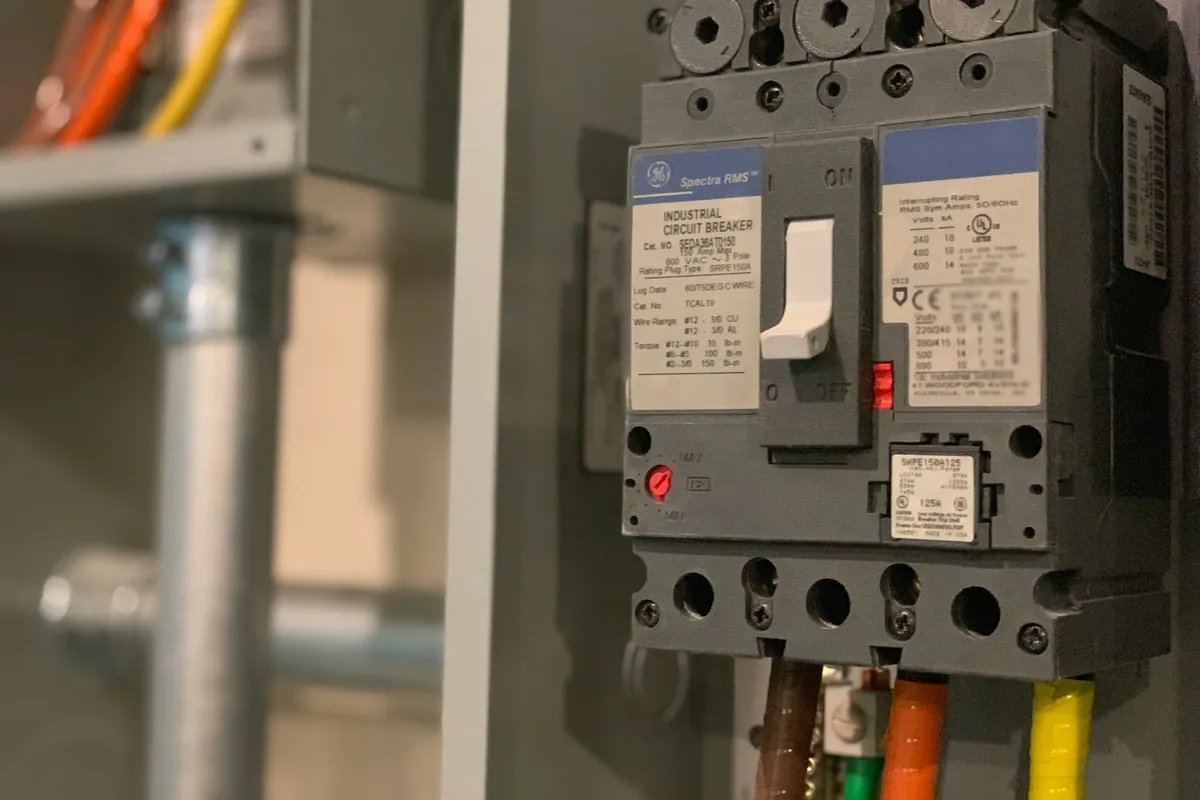
How Should You Size the Inverter, and Does Oversizing Cause Clipping?
Sizing an inverter comes down to two numbers: the AC ceiling the inverter can export, and how much DC panel capacity you hang in front of it. Clipping is what happens when the second outgrows the first, and it's the loss homeowners discover after install, not before. Every string inverter has an AC output ceiling. Wire more DC panel capacity than that ceiling and the inverter caps output at its rated maximum during peak sun, discarding the surplus. That capped energy is clipping.
The lever is the DC-to-AC ratio, sometimes called the inverter load ratio. A 6 kW array on a 5 kW inverter is a 1.2 ratio.
| DC:AC ratio | Typical use | Clipping |
|---|---|---|
| 1.0-1.1 | Sunny climates, unshaded south roofs | Minimal |
| 1.15-1.25 | Most US residential installs | A few percent on peak days, usually worth it |
| 1.3+ | North-facing, cloudy, or east-west spread | Noticeable; only if panels are cheap relative to the inverter |
Mild oversizing is deliberate and good: it fills more of the day at the inverter's rated output and offsets real-world panel losses. It's also what the market already does. LBNL's 2025 data update puts median inverter loading ratios at 1.23-1.25 across US customer segments, and notes that microinverter systems run higher ratios than string systems. Microinverters clip per panel (the IQ8A is rated 349 VA continuous and 366 VA peak), so hanging a much larger module on one buys less than the panel's nameplate suggests. Optimizer systems clip at the shared string inverter, so the ratio is a whole-array decision instead. Run the numbers for your specific panel and inverter in the string configurator linked earlier before locking a ratio in.
How Long Do These Inverters Last, and How Do You Troubleshoot One?
Lifespan splits cleanly by architecture. String inverters (the box in an optimizer system) run 10-15 years and are the component most likely to need a mid-life replacement. Microinverters and power optimizers both carry 25-year warranties and are built to outlast the string inverter, which is the single biggest reliability difference between the two systems.
When output drops, work from the cheapest check to the most expensive:
- Read the monitoring first. SolarEdge and Enphase both flag the failing panel or unit, so a single dark tile in the app localizes the fault before anyone climbs a ladder.
- Match the error code, don't guess. An isolation or ground-fault code points at wiring moisture, not a dead inverter; a grid-profile or voltage/frequency fault usually means a utility-side condition. Check the code against the manufacturer's list before ordering any part.
- Confirm AC before blaming DC. A tripped breaker or a loose AC connection mimics an inverter failure and costs nothing to rule out.
- Escalate to warranty. A string inverter past 12 years with repeated faults is usually cheaper to replace than repair; a single failed microinverter is a one-panel swap under warranty.
The habit that saves the most money here is boring: read the panel-level data before touching hardware, which the monitoring section above walks through. For what the individual readings mean (DC voltage, MPPT channels, isolation faults), see our guide to reading solar inverter data; for a quick monthly sanity check, how to check your panels are working.
Summary
Both technologies attack shading the same way and land within a percentage point of each other, so yield is the wrong axis to choose on. Under light-to-medium shading the measured annual gain over a plain string inverter is about 1.4 points, and the optimizers' own conversion loss of roughly 2 points can cancel it outright (Allenspach et al., Solar RRL, 2023). Optimizer systems cost 10-20% less than microinverters, the default when budget rules or DC-coupled storage is planned. Microinverters eliminate central-inverter replacement risk and simplify multi-orientation roofs and AC-coupled batteries. A plain string inverter remains the cheapest honest baseline on an unshaded roof, though US rapid-shutdown rules usually put a small device on each panel anyway. Plan for a battery before you buy: ask which battery the inverter is certified with, what backup hardware it needs, and whether the main panel can take another backfed breaker. Choose on battery coupling preference, roof complexity, and budget, not yield.
There is a third route that sidesteps the question entirely, which is buying inverter, battery and energy manager from one vendor and accepting the lock-in that comes with it. Huawei's residential stack is the clearest current example of what that trade actually buys and what it costs.