optimization

How to Increase Solar PV Yield by 20% - 2026 Methods

Recover up to 20% of lost solar output with DC power optimizers, MPPT tuning, and a soiling schedule. Peer-reviewed methods with measured results.

· James Whitfield · 14 min read

Updated: May 17, 2026

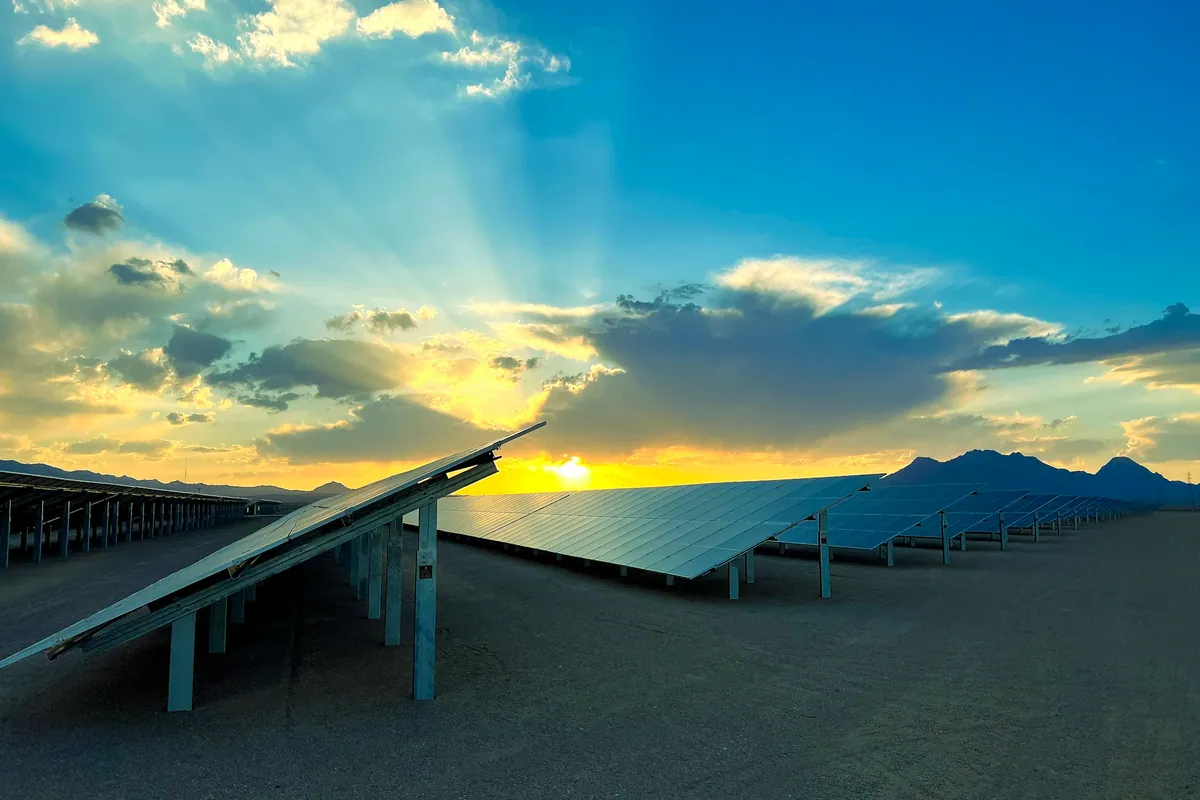
Residential rooftop solar panel array optimized for maximum yield

The single biggest yield lever for most residential systems is eliminating partial shading losses - and the second biggest is measuring what you already have. A peer-reviewed study of residential rooftop arrays found that under real obstruction shading, string inverter losses reached 24% while DC power optimizers reduced the same shading scenario to 9% - a 15-percentage-point recovery (Allenspach et al., ZHAW / Solar RRL, 2023). Even on clean, unobstructed arrays, a proper MPPT audit typically yields a 3 - 8% improvement at zero hardware cost, outlining practical methods proven to work.

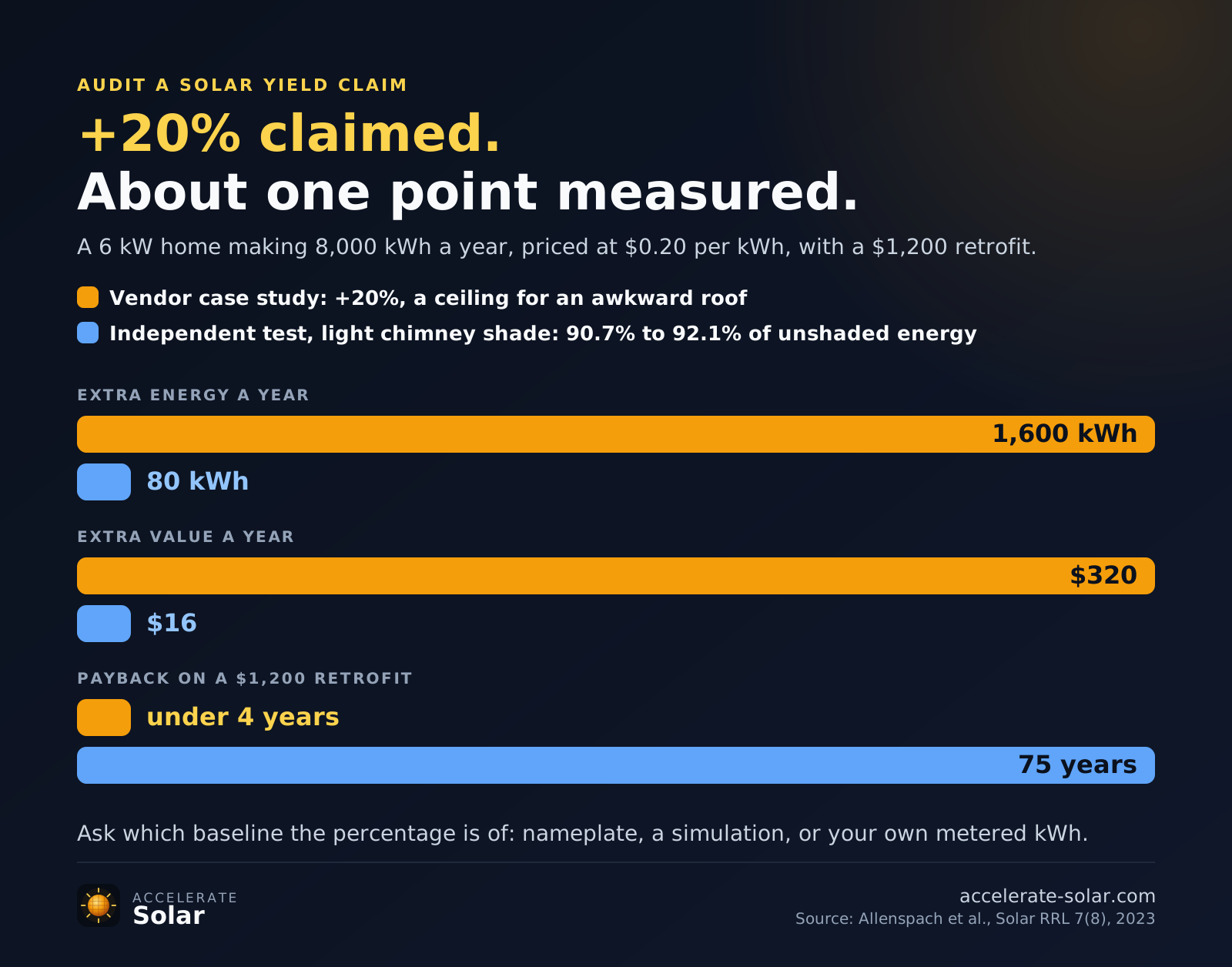
TL;DR: The average residential PV system produces 10 - 25% less than nameplate capacity due to partial shading, panel mismatch, MPPT misconfiguration, and soiling. NREL data covering 2,200+ sites found that inverter availability issues alone cause 2.3% average annual energy loss, and that's before accounting for dirty panels or suboptimal tilt. Fix shading losses with DC power optimizers like the SolarEdge P730S or per-panel microinverters. Fix MPPT issues by reviewing your inverter's string configuration against its voltage window. Fix soiling by cleaning panels every 3 - 6 months in dusty climates, dirty panels can lose 5 - 25% of output depending on soiling density. Add a monitoring platform so you catch degradation before it compounds. Combined, these measures recover 15 - 25% of lost yield in most affected systems. In our experience, payback on optimizer retrofits runs under 4 years on partially-shaded roofs. On a clean unshaded south-facing roof, you won't see the same return.

Honestly, every system I've audited that "felt off" turned out to be one of three things: a partial-shade chimney nobody noticed, a string inverter MPPT range mismatched to the array, or a homeowner who hadn't cleaned panels since install. My take: do the diagnostic before you reach for new hardware.

Why Do Most Solar Installations Underperform?

The average residential PV system produces measurably less energy than its nameplate capacity suggests. The NREL PV Fleet Performance Data Initiative - covering 2,200+ sites and 19,000+ inverters across 37 US states - found that inverter availability alone causes 2.3% average annual energy loss, rising to ~8% in the first six months after commissioning (NREL PV Fleet Performance Data Initiative, 2024). Commercial-scale US assets miss their P50 yield estimates by 5 - 10% across a fleet of 500+ systems totalling 11 GW (kWh Analytics Solar Generation Index, 2022). These gaps add up in real terms: on a 6 kW residential system producing 8,000 kWh/year, a 10% underperformance gap represents 800 kWh of ungenerated electricity - worth roughly $160 annually at average US residential rates, and significantly more in high-cost markets like California, New York, or Hawaii. The gap is rarely due to faulty equipment - it's almost always a combination of:

  • Partial shading - even a single shaded panel throttles an entire string in a standard setup
  • Panel mismatch - production variance between modules from different batches
  • Poor MPPT configuration - inverter inputs not matched to string voltage ranges
  • Soiling - dust, pollen, and bird droppings accumulating unnoticed
  • Suboptimal tilt/azimuth - panels aimed at a compromised angle due to roof constraints
  • Undetected faults - degraded connectors, inverter issues, or cell cracks accumulating over months

The good news: most of these are diagnosable and fixable without replacing the system. Before you touch hardware, run the math through a solar panel efficiency calculator guide to see whether the loss you're chasing is large enough to justify the fix.

Typical Yield Loss Factors - Residential Solar PV Sources: NREL/TP-5D00-73791, IEA PVPS Task 13, EC JRC PVGIS - maximum reported loss per factor Partial shading up to 25% Suboptimal tilt / azimuth up to 15% MPPT misconfiguration up to 8% Soiling (annual avg) up to 7% Panel mismatch up to 5% Wiring / connector losses up to 2% 0% 5% 10% 15% 20% 25% 30%
Maximum reported yield loss per factor in residential PV systems. Sources: NREL/TP-5D00-73791 (2018), IEA PVPS Task 13 (2023), EC JRC PVGIS. Most systems experience 2 - 3 factors simultaneously.

Power Optimizers - When Do They Make Sense?

DC power optimizers solve shading and mismatch at the individual panel level. Each panel gets its own mini-converter that finds its personal maximum power point, independent of its neighbors. In a controlled 10-module residential test under pine-tree obstruction shading, a standard string inverter suffered 24% annual yield loss while a DC optimizer system on the same array reduced that to 9% (Allenspach et al., ZHAW, Solar RRL, 2023). A SolarEdge retrofit case study in Munich documented +20% yield improvement after optimizer installation on an array with complex roof geometry. The mechanism is straightforward: in a standard string inverter setup, panels are wired in series, so one underperforming module pulls the entire string toward a lower operating current. A DC optimizer breaks that dependency - the weakest panel no longer constrains the strongest. For a 6 kW array where two panels are regularly shaded, optimizer hardware payback typically falls between 4 and 7 years based on recovered yield alone, before accounting for the added panel-level monitoring visibility.

Good candidates for optimizers:

  1. Roofs with two or more orientations (e.g., east + west split)
  2. Arrays with persistent shadow from chimneys, vents, or trees
  3. Systems older than 8 - 10 years with diverging panel performance
  4. Rooftops where future shading (tree growth, additions) is expected

Not worth adding when: the array is on a single south-facing pitch with zero shade and panels are matched from a single production lot.

For a detailed comparison of optimizers and microinverters, see our power optimizer vs microinverter guide.

The SolarEdge P370 power optimizer is a well-regarded choice for retrofitting existing string-inverter systems - it maintains per-panel MPPT without requiring a full inverter replacement in SolarEdge-compatible setups. At 99.5% conversion efficiency and IP68 weatherproofing, it adds near-zero overhead while delivering full panel-level monitoring through the SolarEdge portal. For commercial arrays or higher-wattage panels, the SolarEdge P730S power optimizer handles up to 730 W per input and supports two panels per optimizer in parallel configuration.

What Does MPPT Tuning Actually Gain You?

Most installers set MPPT parameters at commissioning and never revisit them. After a few years - as panels degrade unevenly or string configurations change - the inverter's operating range may no longer match the array's actual IV curve. Industry white papers from Fronius and SMA document that mixing east and west strings on a single MPPT channel can cause up to 1% annual yield loss in a representative case - and that reconfiguring to separate channels eliminates it entirely (pv-magazine, mismatch configurations, 2020).

Voc and Vmp Limits

Your inverter's maximum input voltage and MPPT operating range must match your string's actual open-circuit voltage at the coldest expected temperature. At -10 degrees C a standard 400 W panel can reach 50 V Voc - a 10-panel string pushes 500 V. If your inverter's MPPT window tops out at 480 V, you're leaving output on the table every cold morning.

MPPT Channel Allocation

A system with east and west roof sections should use separate MPPT channels, not a single combined input. Mixing east and west strings into one MPPT channel forces a voltage compromise - at any given moment, one orientation is operating away from its maximum power point. If your inverter has two MPPT inputs and they're both connected to the same orientation, reconfiguring takes an afternoon and costs nothing.

Reactive Power Settings

Grid operators in some regions mandate power factor correction, requiring inverters to supply reactive power. This directly reduces active (real) power output - sometimes by 1 - 3% continuously. Review your inverter's reactive power settings and your utility interconnect agreement. If reactive power is enabled and not required by your utility contract, disabling it recovers that output.

How Much Do Tilt and Azimuth Affect Your Annual Output?

Are tilt and azimuth tweaks worth the trouble on an existing roof install? Almost never - but they're worth getting right before the racking goes up.

Getting panels aimed correctly matters more than most homeowners realize. PVGIS simulations for a 5 kWp system at latitude 52 degrees N (central Germany) show that a 45 degrees deviation from due south cuts annual yield by 6 - 8%, while a full east or west orientation costs 15 - 20% compared to the optimal south-facing azimuth (EC JRC PVGIS, 2025). At lower latitudes - California, Spain, southern Australia - the azimuth penalty is slightly smaller in absolute terms, but still substantial.

Tilt angle matters too, but with more forgiveness. For a rooftop at 52 degrees N latitude, the optimal tilt is around 35 degrees. A shallow 15 degrees pitch only loses 5 - 7% compared to that optimum - manageable. A flat-mounted commercial rooftop at 5 degrees tilt, however, loses 10 - 15% year-round and faces compounded soiling problems because water doesn't drain properly.

What to do if your roof constrains azimuth:

  • East-west split arrays: Two strings on opposing slopes, each on a separate MPPT channel, can achieve 85 - 92% of an equivalent south-facing array's annual output while also spreading generation more evenly across the day.
  • Tilt optimization on flat roofs: Mounting frames at 10 - 15 degrees on a flat commercial roof recover 8 - 12% yield over flush-mounted panels and dramatically reduce soiling.
  • Bifacial panels on low-tilt arrays: Bifacial glass-glass modules can partially compensate for low-tilt yield loss through ground-reflected irradiance on the rear side - gaining 5 - 15% extra output depending on albedo.

Analysis: Homeowners with east-west ridge roofs are often told they'll "lose 15%." That's the single-string, single-MPPT comparison. With dual MPPT configuration - treating east and west as independent generators - that gap closes to 5 - 8%. Before accepting a fixed-azimuth penalty, ask your installer whether your inverter supports independent MPPT channels and whether the strings are correctly allocated.

Is Soiling Silently Stealing Your Yield?

How much yield does dust really cost over a year? More than most homeowners expect, and almost always more than the cost of a cleaning visit.

Soiling is the loss factor most likely to grow undetected. Dust, pollen, bird droppings, and lichen accumulate gradually - and without per-panel monitoring, a string-level dashboard shows only a slow aggregate decline that's easy to attribute to weather variation or normal aging.

Globally, soiling causes 3 - 5% of annual PV energy production loss according to IEA PVPS Task 13 (IEA-PVPS T13-21:2022, 2023). The first comprehensive European-scale assessment, published in Renewable Energy in 2025, found regional variation is extreme: Norway averages just 0.2% annual soiling loss while Spain reaches up to 14% in dry scenarios, with a continent-wide average of 0.9 - 5.3% depending on rainfall effectiveness (Fernandez Solas et al., Renewable Energy, 2025). In desert climates - Arizona, the Middle East, parts of Australia - soiling can account for 15 - 25% of total yield loss without regular intervention.

Bird droppings are disproportionately damaging because they form small, opaque, concentrated spots rather than the uniform dust film that self-cleaning rain handles well. A single dropping covering 0.5% of a panel's cell area can reduce that panel's power output by 3 - 8%.

When does cleaning pay off?

  • Fewer than 60 annual rainy days: Manual cleaning 1 - 2 times per year adds more value than the cleaning cost for most system sizes.
  • Near agricultural land, airports, or industrial areas: Pollen, soil dust, and particulate residue build up faster than typical rain events can clear.
  • Flat or low-tilt installations: Panels below 10 degrees tilt don't drain completely; mineral deposits from evaporated standing water accumulate over months.
  • Systems with known bird activity: One or two targeted cleanings per season, focused on affected panels, can recover 3 - 5% annual yield at minimal cost.

If you don't have a cleaning schedule in place yet, our solar panel maintenance guide covers the full routine, from safe DIY cleaning to when it's worth calling a professional.

What monitoring catches: A 50% power drop on a single panel - caused by two overlapping bird droppings - appeared as only a 3.5% whole-system dip in a string-inverter dashboard. Per-panel monitoring from a SolarEdge P370 setup flagged the affected module within 24 hours. On a string-only system, the same soiling event would have continued undetected for weeks or months, compounding with gradual additional accumulation.

Why Is Monitoring the Foundation of Any Optimization Strategy?

You cannot optimize what you don't measure. UV degradation in panel encapsulants - explained in our article on how solar panels use UV light - causes gradual transmittance loss that's completely invisible without long-term trend data. A good monitoring setup should provide:

  • Per-panel production data (when using optimizers)
  • Monthly actual vs. forecast comparison
  • Automatic alerts for anomalies exceeding 5% deviation from expected output
  • Long-term degradation trend (year-over-year same-month comparison)

Monitoring Platform Comparison

PlatformBest ForPanel-Level DataAnomaly AlertsFree Tier
SolarEdge MonitoringSolarEdge optimizer systemsYes (per panel)YesYes
Enphase EnlightenEnphase microinverter systemsYes (per panel)YesYes
SMA Sunny PortalSMA string/hybrid invertersString-levelYesYes
Fronius Solar.webFronius inverter systemsString-levelYesYes
Solar AnalyticsBrand-agnostic, deep analyticsString-levelAdvanced MLPaid

For systems without per-panel visibility, Solar Analytics is worth the subscription cost - its ML-based anomaly detection catches shading and soiling issues that string-level data alone misses. It's also inverter-agnostic, so it works with any string inverter brand.

The minimum monitoring standard for a system you want to actively optimize: monthly actual vs. PVGIS forecast comparison with at least 13 months of history (to catch year-over-year degradation trends). Most inverter portals provide this automatically if the system was correctly commissioned.

Citation capsule: Residential solar systems lose 10 to 25 percent of potential output to addressable causes, primarily partial shading, soiling, inverter clipping, and MPPT misconfiguration (NREL PV Fleet Performance Data Initiative, 2024). DC power optimizers recover the largest share: peer-reviewed testing on real rooftops measured string inverter shading losses at 24 percent of annual yield, reduced to 9 percent with per-panel optimizers (Allenspach et al., Solar RRL, 2023). Even on unobstructed arrays, a systematic audit covering MPPT channel allocation, tilt angle, and a soiling baseline typically yields 3 to 8 percent improvement at zero hardware cost. The recommended priority order is monitoring first, then MPPT reconfiguration, then a cleaning schedule if soiling exceeds 3 percent, and finally DC power optimizers if shading or mismatch is confirmed. Each step is independently valuable and none requires replacing a working system.

Summary

Combining per-panel optimization with systematic monitoring can recover substantial yield in affected installations - peer-reviewed testing shows string inverter shading losses of 24% reduced to 9% with DC optimizers (Allenspach et al., Solar RRL, 2023). Even on clean, unobstructed arrays, a proper audit - covering MPPT configuration, tilt/azimuth, and a soiling baseline - typically yields a 3 - 8% improvement at zero hardware cost. Prioritize in this order: (1) real-time monitoring to establish your baseline loss profile and protect the solar investment, (2) MPPT reconfiguration to increase solar panel output if you have mixed orientations or incorrect channel allocation, (3) regular cleaning if soiling analysis shows losses above 3%, it has an outsized effect on overall solar panel efficiency, (4) tracking systems on ground-mount arrays in the northern hemisphere where a fixed tilt sacrifices 15-25% of available solar energy, and (5) DC power optimizers if shading or mismatch is confirmed as a significant factor reducing photovoltaic PV cell-level output. Each step is independently valuable, and none requires replacing a working solar cells assembly. For a complete system-level view covering inverter sizing, battery storage integration, and design-phase decisions, see our solar system optimization complete guide.

Frequently Asked Questions

When do power optimizers actually pay off?
Power optimizers deliver the highest ROI when your roof has more than one orientation, partial shading from chimneys or trees, or mismatched panels from different production batches. On a fully unobstructed south-facing roof they add cost without significant benefit.
How much can shading reduce solar output?
In a traditional string inverter setup, shading a single panel by 25% can reduce the entire string's output by up to 25%. With per-panel optimizers, the loss is limited to only the shaded panel, typically 2 - 5% of total array output.
What is MPPT and why does it matter?
Maximum Power Point Tracking (MPPT) is the algorithm an inverter uses to continuously find the voltage at which a panel produces maximum power. Poor MPPT tuning - or too few MPPT inputs - can cost 3 - 8% in annual yield, especially in variable cloud conditions.
How often should I review my monitoring data?
Check your daily yield against forecast every 2 - 4 weeks. Most monitoring platforms flag anomalies automatically, but a manual review once a month helps catch gradual degradation and soiling losses before they compound.
What monitoring platform is best for residential solar?
SolarEdge monitoring offers the deepest per-panel visibility when using SolarEdge optimizers. For non-SolarEdge systems, SMA Sunny Portal and Fronius Solar.web both provide strong string-level data and automatic anomaly alerts. Enphase Enlighten is the top choice for microinverter systems.

Sources