

Generac built its name on standby generators, and that history shapes the PWRcell more than any datasheet does. It's a modular battery scaling from 9 to 36 kWh, it backs up a whole electrical panel rather than a handful of circuits, and it sells almost entirely through a certified dealer network.
That last detail matters as much as the specifications do.
What Is the Generac PWRcell, Exactly?
It isn't a single product. A PWRcell installation is an inverter, a cabinet holding a stack of battery modules, DC optimizers called PV Links, SnapRS rapid shutdown devices at module level, and the electrical work tying it into your panel.
You don't assemble these from separate suppliers. The whole thing arrives as one integrated system through a dealer, which is the root of most of its advantages and all of its constraints.

The chemistry is LFP, lithium iron phosphate, rated beyond 3,000 cycles to 80 percent capacity and carrying a 10-year warranty on capacity and performance. The cabinet is IP65 rated, so an exterior wall is a legitimate mounting location rather than a compromise. Certification covers UL 9540, UL 9540A for fire safety, and IEEE 1547 for grid interconnection.
How Much Capacity Do You Actually Get?
Each module holds 3 kWh. A cabinet takes three to six of them. So one cabinet spans 9 kWh at the entry point to 18 kWh fully populated.
Here's the detail the marketing glosses over: the advertised 36 kWh ceiling needs two inverters and two cabinets. That isn't a bigger battery, it's a second complete system alongside the first, and it roughly doubles both the wall space and the price. If a quote promises 36 kWh at anything near single-system cost, something has been misunderstood.
Generac states these as usable capacity rather than nominal. That's genuinely unusual, because most manufacturers quote nominal and leave you to work out the reserved headroom yourself. I'd still want it confirmed in writing on the specific quote, since "9 kWh" written by a salesperson and "9 kWh usable" written by an engineer aren't always the same sentence.
The modularity is the strongest argument for this system and, to my mind, the most undersold. Start at 9 kWh. Add a module when an EV arrives or a heat pump goes in. Set that against replacing an entire fixed-capacity unit once you outgrow it, and the upgrade economics are hard to argue with.
The modularity is the strongest argument for the PWRcell and the most undersold. Start at 9 kWh, add a module when an EV arrives.
Why Does the Inverter Set the Real Limit?
Capacity tells you how long you can run. The inverter tells you how much you can run at once, and households confuse these two constantly.
The PWRcell inverter delivers 7.6 kW continuous at 120/240V split phase and accepts up to 6,200W of solar input. During an outage that 7.6 kW is a hard ceiling, no matter how many modules sit in the cabinet.
What does it buy in practice? A central air conditioner pulling 3 to 5 kW, plus a refrigerator at 150W, plus lighting at 300W, fits comfortably. Add an electric range, which alone can draw 6 to 8 kW across its burners, and you're past the limit.
Motor starting is the sharper constraint. An air conditioner compressor pulls several times its running current for a fraction of a second at startup. If central air sits on your backup list, that surge is the number to check, and a soft starter on the compressor usually costs less than stepping up to a larger inverter. That's the fix I'd price first.
Working out your own load profile before an installer does it for you is an hour well spent. Our home solar battery sizing guide covers the arithmetic.
Does It Really Back Up the Whole House?
This is where the generator heritage shows, and it's a real differentiator rather than a marketing line.
The M6 inverter is grid-forming. In normal operation it follows the grid's frequency. When the grid drops, it islands your electrical panel and synthesizes its own 60 Hz reference, which lets it power the entire panel instead of a separate critical loads subpanel.
Most competing residential batteries need that subpanel, or a system controller, to do the same job. An electrician moves your chosen circuits onto it during installation, and you live with those choices for years afterwards. The PWRcell skips the step: your 240V loads, the HVAC compressor, the water heater, the range, all stay connected.
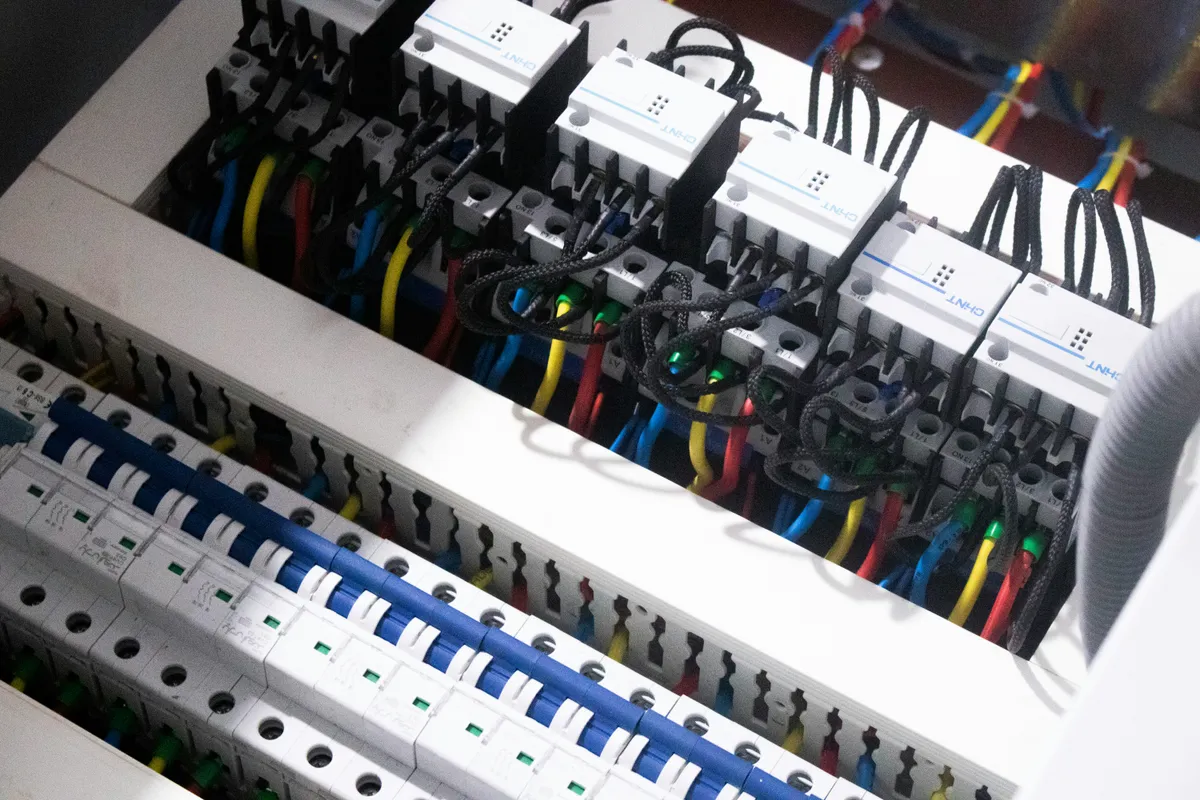
The ceiling gets handled by automatic load shedding, dropping lower-priority circuits when demand outruns supply. You end up with whole-home wiring and managed consumption, which behaves far more like a standby generator than like a typical battery.
What Does a PWRcell Cost Installed?
Expect roughly 15,000 to 22,000 USD installed in the US before incentives, and treat the width of that range as the actual finding.
Why so wide? Module count, service panel upgrades, roof complexity, permitting and local labour rates each shift the figure by thousands. A quote from one state tells you very little about another.
Payback depends far more on your electricity rate than on the hardware. Around 0.15 USD per kWh with strong solar self-consumption, a 9 kWh system lands somewhere in a 12 to 16 year payback. In California or Hawaii, where peak rates run 0.30 to over 0.40 USD per kWh, that compresses to roughly 7 to 10 years.
The system qualifies for the 30 percent federal Investment Tax Credit when installed alongside solar, and standalone storage currently qualifies as well, though those provisions have shifted before and deserve checking with a tax professional for your install year. Our solar tax credits guide covers the current position, and full specifications sit on the Generac PWRcell product page.
Who Should Skip It?
Three groups, and being straight about them is more useful than another list of advantages.
Anyone retrofitting onto existing AC-coupled solar. If your array already runs its own inverter, adding a PWRcell means either replacing that inverter or forfeiting the DC-coupling advantage that justified picking it. An AC-coupled battery is usually the better engineering answer there, and our Powerwall 3 versus Enphase IQ comparison covers that side of the market.
Anyone who wants open monitoring. The API is closed, there's no official Home Assistant integration, and community workarounds break on firmware updates. The PWRview app is functional, and that's roughly the extent of the praise it earns.
Anyone needing more than 7.6 kW at once. A Powerwall 3 does 11.5 kW. When your load list is genuinely heavy and simultaneous, no amount of extra capacity fixes an output ceiling.
Summary
The Generac PWRcell is a modular LFP battery scaling from 9 to 18 kWh per cabinet in 3 kWh steps, driven by a grid-forming 7.6 kW inverter that backs up an entire electrical panel without a critical loads subpanel. Installed cost typically runs 15,000 to 22,000 USD before incentives, with payback stretching from about 7 years in high-rate states to 16 in cheap ones. Its strengths are granular expansion and genuine whole-home backup. Its weaknesses are a lower output ceiling than Tesla's, a closed monitoring ecosystem, and a proprietary component chain that ties you to Generac's dealer network. Get two quotes, because installer variation on this system exceeds the difference between it and its competitors.