

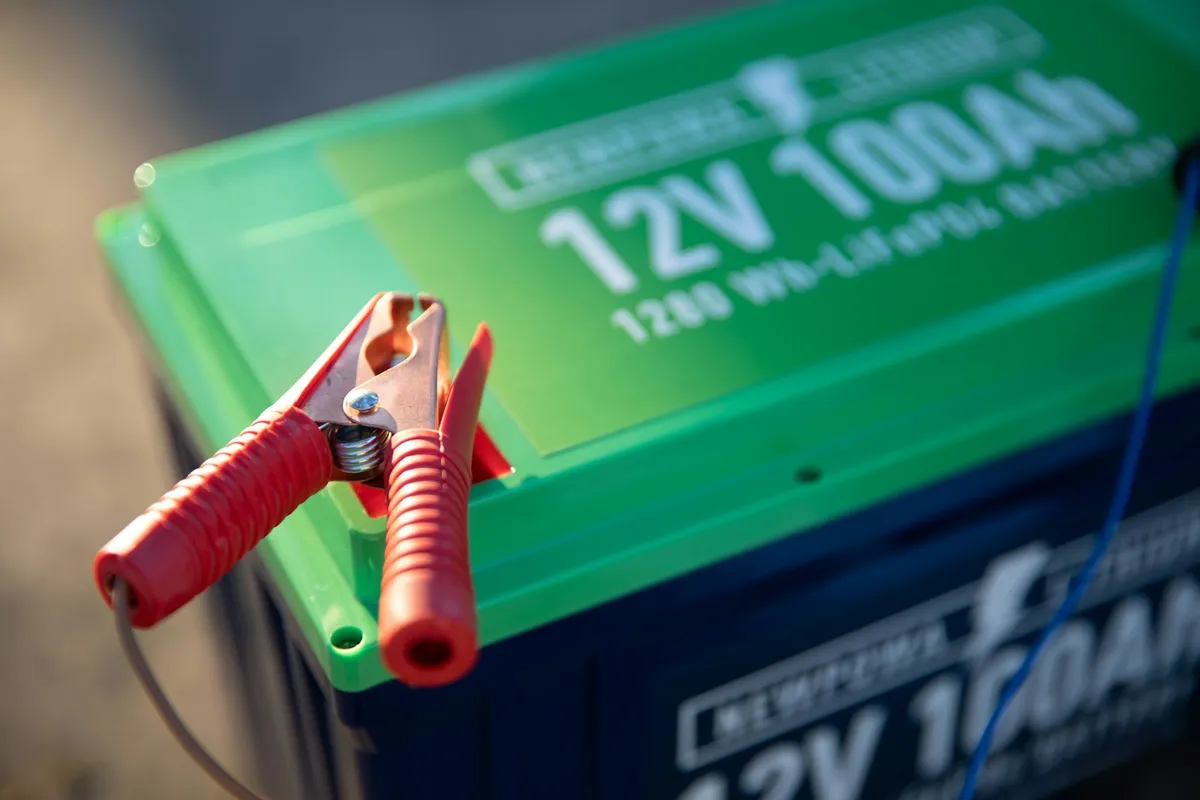
Can you hang a Renon Power battery on a Fronius GEN24? Since 13 January 2026, yes, and it's official: Fronius USA and Renon certified the Xtreme HV 1.0 for the GEN24 and GEN24 Plus, with hardware shipping from 12 February. The catch sits in geography. This pairing exists in North America and nowhere else.
What Did Fronius and Renon Actually Certify?
The certified stack is specific. GEN24 and GEN24 Plus inverters from 3.8 to 10.0 kW, plus the Xtreme HV 1.0 in two, three or four module towers: 9.6, 14.4 and 19.2 kWh, running 192 to 384 V DC. A plain GEN24 gets battery capability through the paid software unlock, the same UP.storage route I covered in the three-way battery inverter comparison.
| Spec | Certified Fronius + Renon pairing |
|---|---|
| Inverters | GEN24 / GEN24 Plus, 3.8 to 10.0 kW |
| Battery configurations | 9.6 / 14.4 / 19.2 kWh (2 to 4 modules) |
| DC voltage range | 192 to 384 V |
| Chemistry | LFP, 1P32S, 50 Ah cells |
| Cycle rating | 8,000 cycles |
| Warranty | 10 years both products, +2 years material on registration |
| Safety listings | UL 1973, UL 9540, UL 9540A, IEC 62619, UN 38.3 |
| California CEC ESS listing | Yes, July 2026 |
One number needs an asterisk. Renon's own datasheet calls a two-module stack 10.24 kWh nominal, not 9.6. My reading is that the pairing quotes usable energy at roughly 94 percent depth of discharge while the datasheet quotes nameplate, but neither company prints the reconciliation, and I'd rather flag the gap than paper over it.
Why Does the Pairing Stop at 19.2 kWh?
Voltage arithmetic. Renon sells the Xtreme HV 1.0 up to six modules and 30.72 kWh. The GEN24's battery input accepts 150 to 455 V. A five-module stack sits at 512 V nominal. Six modules, 614 V. Neither fits, so the certified pairing tops out where the physics does, at four modules.
The four-module tower deserves its own footnote. On the datasheet its charge window reaches 467 V, past the inverter's 455 V ceiling and past the 419.7 V threshold where Fronius documents AC output derating. The certified pairing instead states 192 to 384 V, which tells me the closed-loop controls hold the stack inside a narrower band than the battery would use standalone. That's the kind of detail a certification is actually for.
Fronius keeps two battery lists, one per continent, and the Renon Xtreme HV is only on the American one.
Check the international page yourself: Fronius Reserva, five BYD Battery-Box lines, LG Flex. No Renon. In Europe the BYD Battery-Box Premium HVS remains the default third-party answer, and I'd argue a compatibility list that differs by continent is really a support and warranty document wearing an engineering costume. The cells don't care which side of the Atlantic they're on.
How Does It Compare With the Fronius + BYD Pairing?
On paper the two pairings rhyme. Both are DC-coupled LFP towers on the same inverter. The differences are timing, territory and paperwork. BYD's GEN24 combination reached California's CEC ESS list in March 2025; Renon followed in July 2026. BYD spans 5.1 to 22.1 kWh across HVS and HVM; the certified Renon range is narrower at 9.6 to 19.2.
So where would I slow down? Warranty structure. The Renon deal gives 10 years on both products, plus 2 extra years of material warranty if you register in Solar.web and the Renon app. Sounds generous. It also means an unregistered system quietly carries the shorter cover, and Fronius has form here: inverter registration within 30 months, and a 6-month deadline on the paid extension the datasheet never mentions.
What surprised me while cross-reading the documents was temperature. The datasheet recommends 0 to 30 degrees C against an allowed minus 20 to plus 50, an honest admission in the Enphase style that where a battery survives and where it thrives are different places. A Phoenix garage wall is legal and still a bad idea.
What Would I Check Before Signing a Quote?
Price first. EcoDirect lists the three-module stack at 7,542 dollars, about 490 dollars per nominal kWh before installation. That's one distributor's list price. Is it cheap? Against most US-market high-voltage towers, yes, and I'd take a certified Renon stack over a gray-market bargain battery every single time, an opinion plenty of forum posters will fight me on.
Then size before you shop. The battery sizing guide walks the load arithmetic, and 9.6 versus 14.4 kWh matters more than any spec row above. If your tariff is dynamic, run our battery sell-hours calculator too. Its price spreads decide how hard those 8,000 cycles will ever work.
Last, backup expectations. The pairing carries the GEN24's PV Point outlet and supports full-home transfer through the EBLU bridge hardware. Switchover is measured in seconds, not milliseconds. Fine for a fridge. Not an uninterruptible supply.
Summary
Renon Power's Xtreme HV 1.0 is a certified, supported battery for the Fronius GEN24 and GEN24 Plus in North America, announced 13 January 2026, shipping since 12 February, and CEC listed for California since July. The pairing covers 9.6, 14.4 and 19.2 kWh LFP towers at 192 to 384 V, rated 8,000 cycles, warranted 10 years plus 2 on registration. The GEN24's 455 V battery input is why it stops at four modules while the battery line runs to 30.72 kWh. Outside North America, Fronius's list still holds only Reserva, BYD and LG Flex, so treat the Renon route as a US-market answer, price it against a local BYD quote, and register both warranties the week the system is commissioned.