

Daikin put a new rooftop unit on the market in July 2026, and the trade press filed it under HVAC. It belongs in the solar pile too, because it lands on exactly the surface you were planning to cover in modules.
The unit is the Nexio Max, from Daikin Comfort Technologies North America, aimed at light commercial buildings in both replacement and new construction. Three sizes: 7.5 ton at 90,000 Btu/h, 8.5 ton at 102,000 Btu/h, 10 ton at 114,000 Btu/h.
What Did Daikin Actually Ship?
The headline numbers are good, and worth writing down before arguing about them.
| Spec | Value |
|---|---|
| Capacities | 7.5 / 8.5 / 10 ton (90,000 / 102,000 / 114,000 Btu/h) |
| Refrigerant | R-32, 9.5 kg factory charge |
| Cooling efficiency | IEER 21.0 to 22.0, EER 12.1 to 12.4 |
| Heating COP | up to 3.85 at 8.3 C, 2.5 at -8.3 C |
| Operating range | down to -25 C, 85% of rated heating capacity at -10 C |
| Airflow | 2,950 to 3,600 cfm, blower 300 to 1,600 rpm |
| Power | 208/230 V or 460 V, three phase, 60 Hz |
| Operating weight | 586 kg |
Variable-speed scroll compressor on an inverter drive, two variable-speed condenser fans, BACnet on board. The IEER of 22 matters most, because IEER is weighted for part load, and part load is where a rooftop unit spends its life.
Is the Roof Really the Contested Asset?
Here's the assumption I keep hearing on commercial sites: the mechanical equipment eats the roof, so the array shrinks. Check it against the arithmetic and it mostly falls apart.
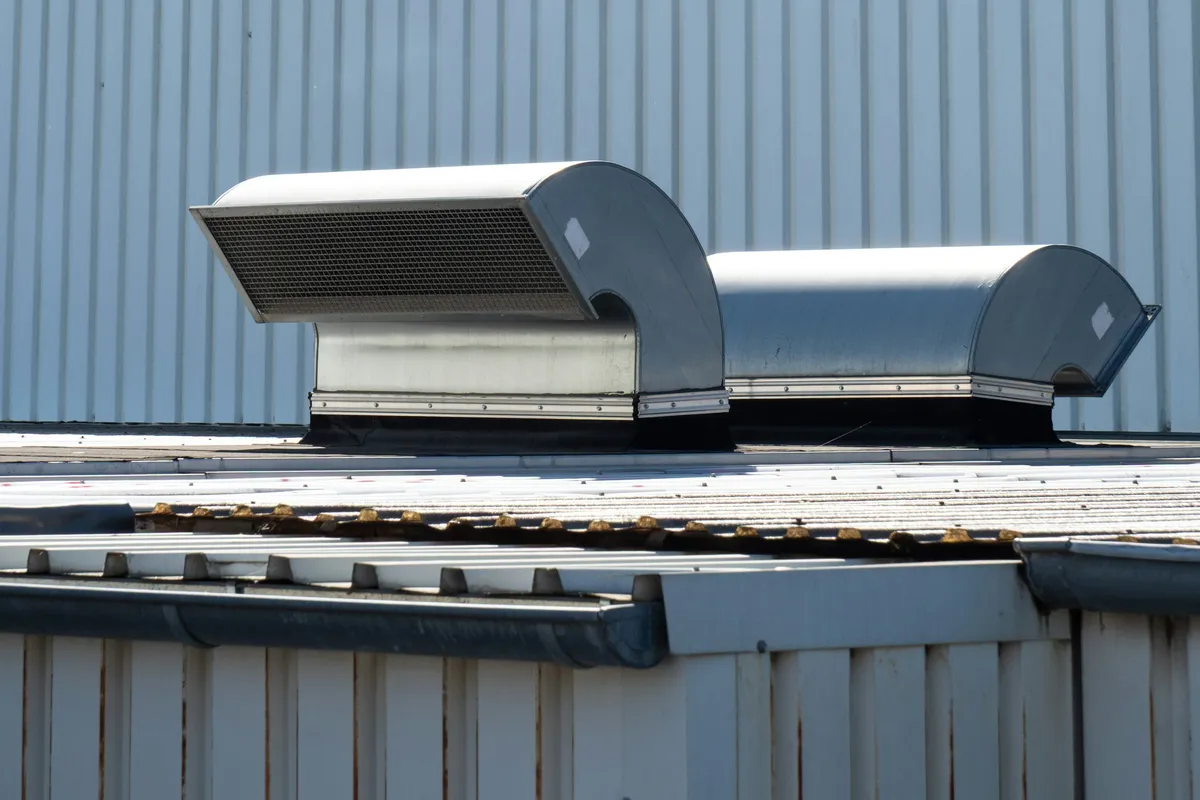
My assumptions, stated so you can argue with them. Take the 10-ton unit at its rated EER of 12.1. That's 114,000 Btu/h of cooling for about 9.4 kW of electrical input at full load. To actually cover 9.4 kW at midday on a clear day you want something like 11 to 12 kW DC installed, because a real array under real irradiance and real temperature never hits nameplate. Call it 26 modules at 430 W, and on ballasted flat-roof racking with row spacing that's roughly 100 square metres.
The rooftop unit and its curb do not take 100 square metres. The array is the larger claim on the roof by a wide margin, and the unit is a rounding error next to it.
The real cost is geometric. The unit sits on a curb, well above the plane of a ballasted array, and that height is what turns a small footprint into a long moving shadow. Modules wired in a string share current, so a shadow crossing one module drags the whole string down unless you've paid for optimizers or microinverters. Put the unit on the north side of the array and most of this evaporates. Put it in the middle and you'll be explaining the production shortfall for years.
Why Does an Inverter Drive Change the Solar Math?
This is the part that makes a heat pump launch a solar story rather than an HVAC one.
A single-stage rooftop unit is either off or pulling its full load, and it draws a hard inrush every time it starts. Solar doesn't help it much, because the two are only accidentally in phase.
An inverter-driven unit is a different animal. It modulates, so on a mild afternoon it can sit at 30 or 40 percent and stay there. That's a load profile that tracks irradiance rather than fighting it, and it's why the IEER of 22 is more interesting than the EER of 12.1. Cooling demand and solar production peak within an hour or two of each other in most climates, so every kWh the unit takes at 2pm is a kWh you self-consume at full retail instead of exporting for whatever the tariff pays.
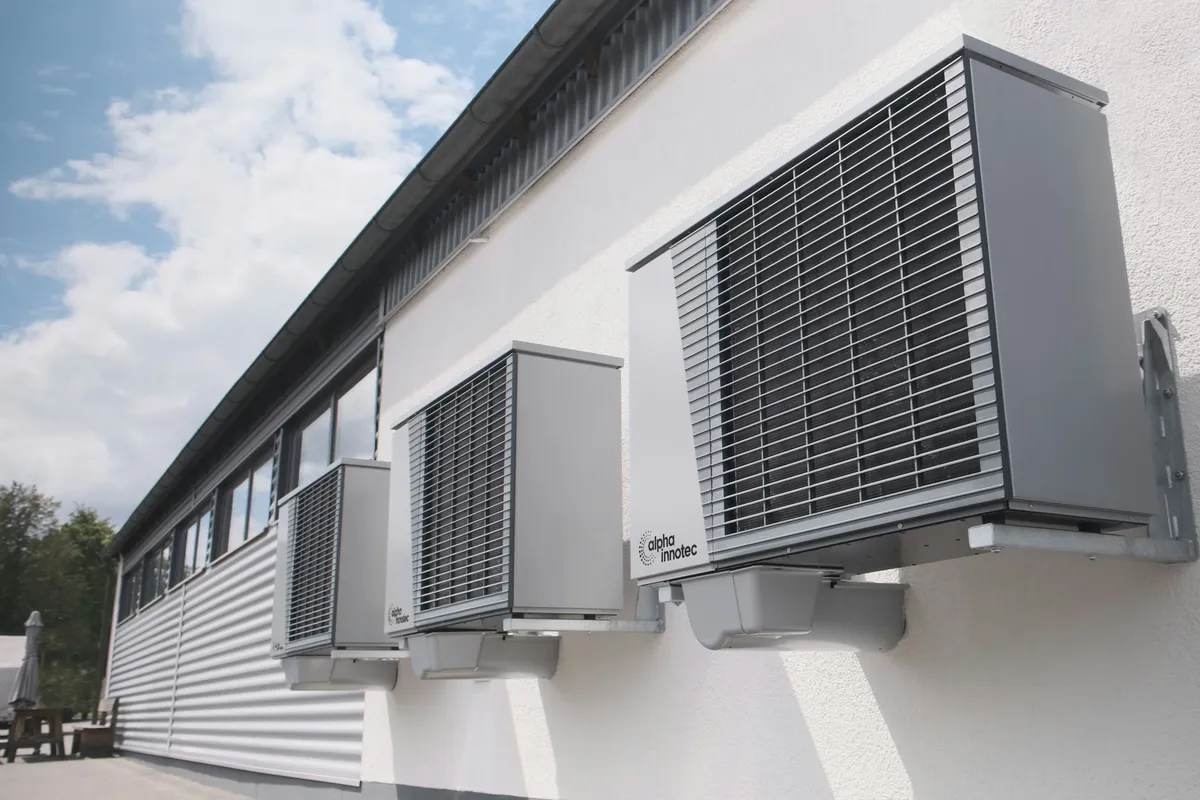
That's the same argument I made about heating water at midday, scaled up by two orders of magnitude and pointed at a building that already has a demand charge.
What Is the Case Against It?
Two things spoil the story, and you should hear them before the sales deck.
The winter numbers are weak in exactly the wrong month. COP 3.85 at 8.3 C is excellent. COP 2.5 at -8.3 C, drawing something like 7.4 to 9.4 kW to deliver 63,000 to 80,000 Btu/h, is ordinary, and it happens in the same weeks your array is producing least. Anyone selling you an annual self-consumption figure on this pairing is averaging across a seasonal mismatch. The cooling season carries the argument. December doesn't.
Second, demand charges don't care about your energy story. A commercial bill prices the worst fifteen minutes of the month, and a cloud crossing the array on a hot afternoon sets a peak solar never undoes. That's a battery problem, not a panel problem, and it's the line item that decides whether the commercial ROI works.
Summary
Daikin's Nexio Max is a light commercial rooftop heat pump in 7.5, 8.5 and 10-ton sizes, running R-32, rated at IEER 21 to 22 and a heating COP of up to 3.85 at 8.3 C, falling to 2.5 at -8.3 C. For a solar owner the interesting property isn't the efficiency rating, it's the inverter drive: a unit that modulates can follow an array instead of switching against it, which turns afternoon cooling into self-consumption at retail value. The footprint costs you almost nothing, the shadow costs you a lot if you place it badly, and the winter COP means the pairing has to be justified on the cooling season rather than the year.